

Rio Grande at Central Bridge
When Visiting...
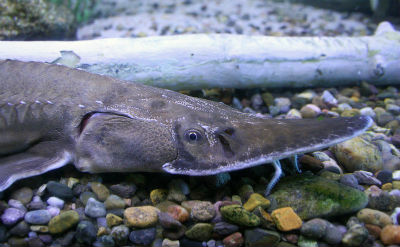
- Discover fascinating fish like shovelnose sturgeons and gar that once swam in the Rio Grande.
- Compare past to present and see first-hand how pollution and invasive species can affect fish and other animals.
- Try to spot the turtles.
- Watch a short film in the Aquarium Theater.
- Look for trout in the cold, clear mountain stream.
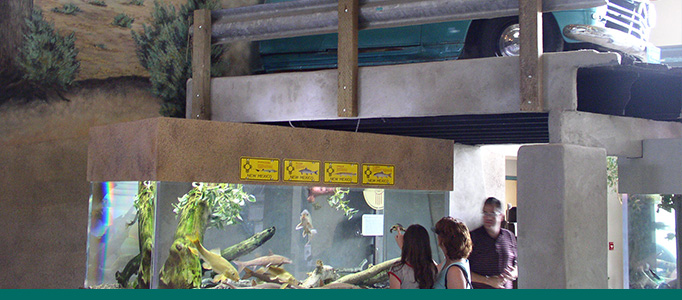
Just inside the Aquarium entrance, a 1950 Hudson travels over the Rio Grande at Central Bridge. Weaving together historical and modern elements, the exhibit is a window into the Albuquerque reach of the Rio Grande today and a century ago. Nearby, the Trout Stream represents the headwaters of the Rio Grande.
Rio Grande Past
The historical tank showcases some of the thirteen species that have vanished from the Rio Grande. Evidence comes from bones found in Pueblo ruins and writings of Spanish explorers and early biologists. Even this historic view is incomplete—the Rio Grande bluntnose shiner and the Phantom shiner are extinct today.
Rio Grande Present
Get a fish's view of the Rio Grande's current ecosystem. Dams and levees alter the flow, water is diverted for agriculture, and overgrazing causes erosion. During some seasons, much of the river is dry. Invasive fish out-compete native species like the endangered silvery minnow.
Trout Stream
Near its headwaters in southern Colorado, the Rio Grande runs swift, cold and clear. Look for trout in this exhibit with fallen logs and a forest mural that add to the mountain stream ambience.
The Rio Grande cutthroat trout (Oncorhynchus clarki virginialis) is the state fish of New Mexico, and is named for the reddish-orange slashes on its lower jaw. The Rio Grande cutthroat and Gila trout (O. gilae) are the only native trout in New Mexico. Look for Gila trout in the Shark Reef Cafe.
Our Actions Matter
Native fish are threatened by pollution, invasive species and drought. Here are some ways you can help conserve native species and their habitat:
- Conserve water: Take shorter showers, close running faucets and wash full loads of laundry.
- Be a responsible pet owner: Don't release pet fish into native waters. If they survive, they can become invasive species.
- Reduce pollution: Dispose of your recyclables and waste responsibly. Runoff during the rainy season washes loose trash into gutters and storm drains that lead to the Rio Grande. Less trash in the streets means less trash in the river and cleaner habitats for native species.
Resources and Links
- For more water conservation ideas, visit wateruseitwisely.com.
- Calculate your water footprint.
Rio Grande Exhibit Photos