

ABQ BioPark Welcomes First Mexican Gray Wolves to New Conservation Facility in Albuquerque
A major step forward for Mexican gray wolf recovery.
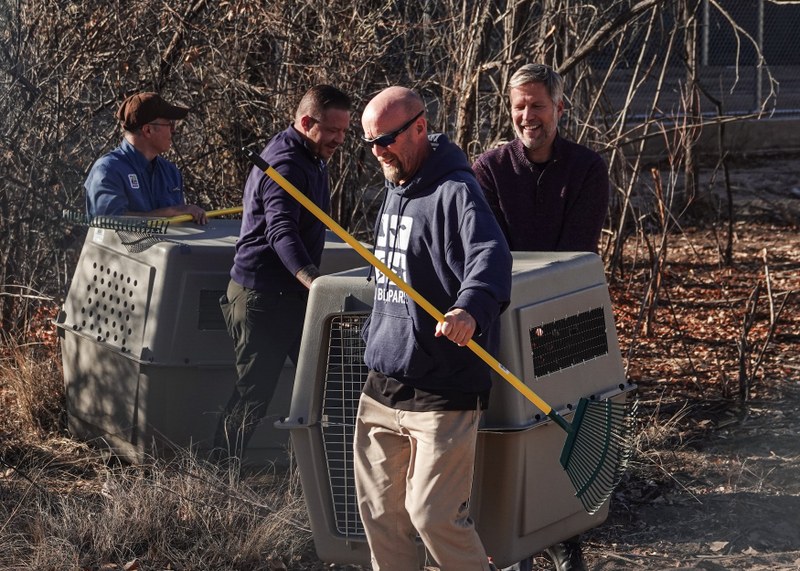
On December 19, the ABQ BioPark marked a major milestone in Mexican gray wolf recovery as nine wolves moved into the new Mexican Wolf Conservation Facility, a purpose-built, off-exhibit site dedicated to fostering, rehabilitation, and collaborative care of this endangered species. For the first time the facility is now home to the wolves it was built to serve, turning years of planning and partnership into real progress for this species.
Wolves released into the new facility recently arrived from other Mexican wolf recovery program partners as well as from a behind-the-scenes habitat at the BioPark Zoo and are now settling into the expansive, largely native habitat designed to support natural behaviors and minimize human contact.
“Today is about hope. Not just hope for these wolves, but for the landscapes they help keep healthy,” said Mayor Tim Keller. “With the backing of Albuquerque voters who invested in the BioPark, our city is stepping up to support the long-term recovery of the Mexican gray wolf.”
Today’s move-in marks one of the most significant steps yet in the BioPark’s role in Mexican gray wolf recovery. What was once only a vision on paper, a dedicated space where wolves can heal, grow and prepare for life in the wild, is now a fully functioning part of the recovery effort.
"Mexican wolves are native to New Mexico, so this work is deeply connected to our own backyard,” said BioPark Director Brandon Gibson. “By partnering with the U.S. Fish & Wildlife Service, New Mexico Department of Game and Fish and other recovery facilities, the BioPark is proud to be one of the hubs where this species gets a real second chance.”
On the afternoon of December 19, BioPark animal care experts and Mayor Tim Keller were joined by representatives from the U.S. Fish & Wildlife Service (USFWS), and staff from the offices of both U.S. Representative Melanie Stansbury and U.S. Senator Martin Heinrich helped guide the wolves into their new habitats at the conservation facility.
The BioPark’s Mexican Wolf Conservation Facility is designed specifically for fostering, rehabilitation, and collaborative care of Mexican gray wolves, one of North America’s most endangered mammals. The facility operates in partnership with USFWS and the New Mexico Department of Game and Fish (NMDGF).
“This new facility allows us to do even more for one of North America’s most endangered mammals,” said BioPark Associate Director Lynn Tupa. “By giving Mexican gray wolves the space, privacy and specialized care they need, we’re helping prepare them for the next step in the recovery program — whether that’s rehabilitation, breeding or release back into the wild.”
These wolves are part of the Association of Zoos and Aquarium’s Mexican Wolf Saving Animals From Extinction (SAFE) program and the USFWS’s Mexican Wolf Recovery Program, which together coordinate care, breeding and pre-release efforts across partner facilities in the United States and Mexico in support of recovery in the wild.
The conservation facility spans approximately 4.5 acres, most of which is wild, native habitat, and includes multiple habitats that can accommodate several breeding pairs.
To help wolves maintain their wild nature, the facility is off-limits to the public, and human contact is minimized. Guests can still see Mexican gray wolves at the BioPark Zoo, where a family of wolves live in a habitat viewable to guests and helps tell the story of the recovery program.
The ABQ BioPark has a long history supporting the Mexican wolf recovery effort, and today’s milestone builds on decades of work. Over the years, the BioPark has:
- Provided critical veterinary care to more than 40 wolves injured or in need of medical treatment.
- Welcomed 79 Mexican wolf pups across 16 litters born at the BioPark.
- Participated in coordinated breeding and release efforts through the Mexican Wolf SAFE program and the USFWS-led recovery program.
The new Mexican Wolf Conservation Facility marks a hopeful next chapter for this iconic Southwest species. By working hand-in-hand with federal, state and local partners, the BioPark is helping ensure that each wolf in its care brings us closer to a thriving wild population and that the howl of the Mexican gray wolf continues to be part of the Southwest for generations to come.
Note to media: Photos and rough cut b-roll available, raw interviews with BioPark Director and Associate Director at the end of clip.