

Lea Anderson: Meridiae
July 14, 2015 – July 2016
⇦ back to Visiting Artist homepage
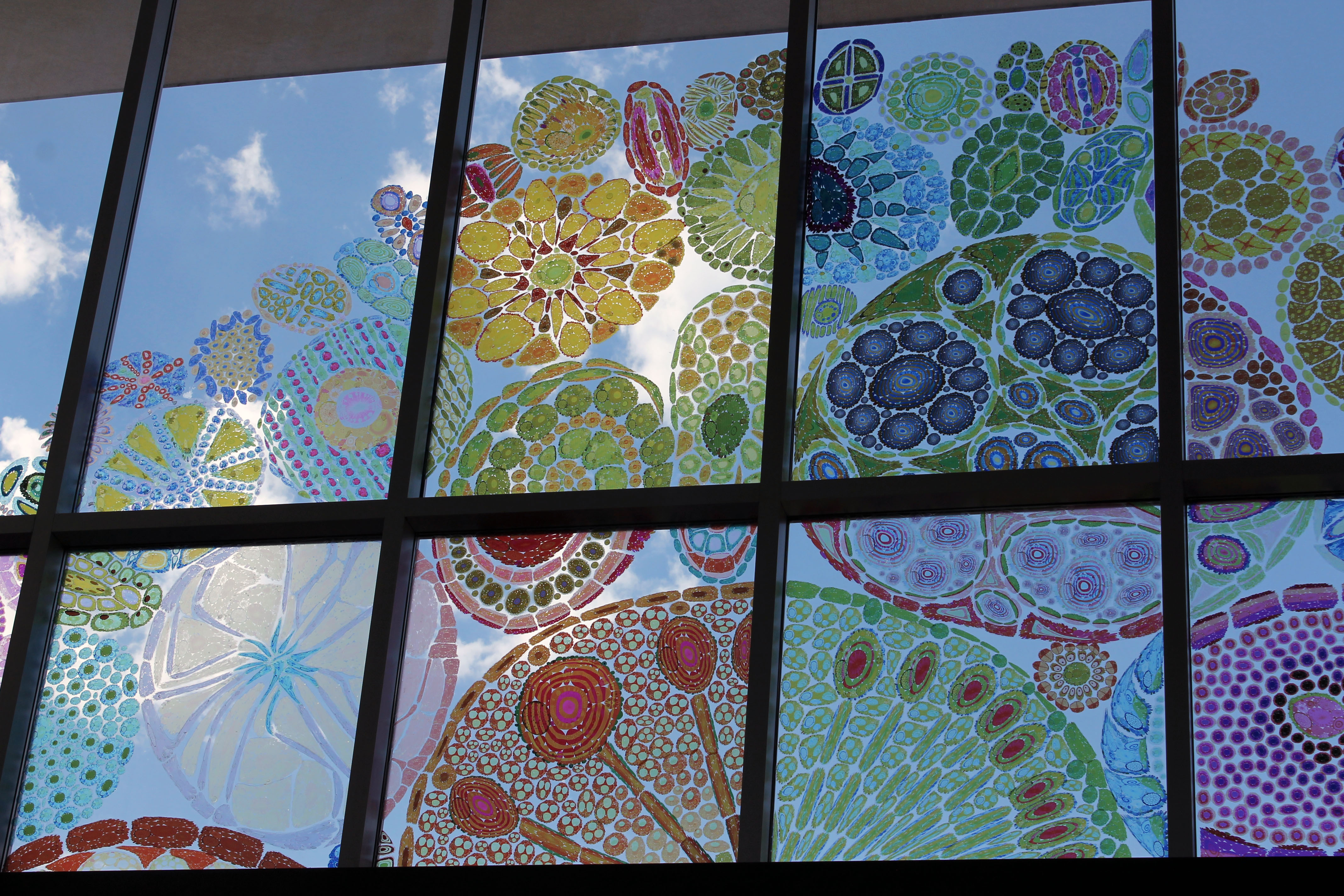
Lea Anderson, Meridiae (detail), 2015, myriad digital prints on transparent acetate, 240 x 240 in.
Installation timelapse
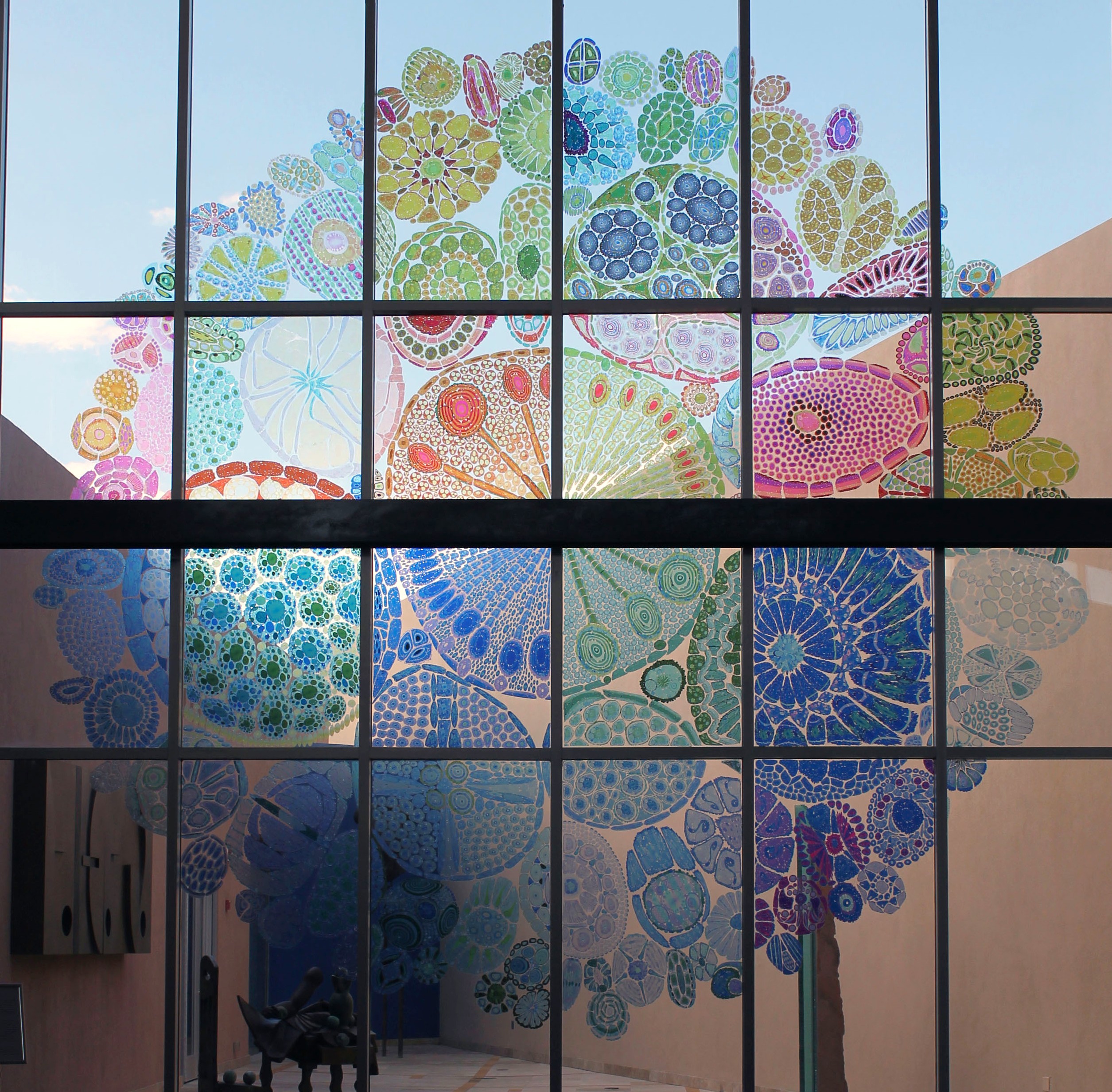
Lea Anderson, Meridiae
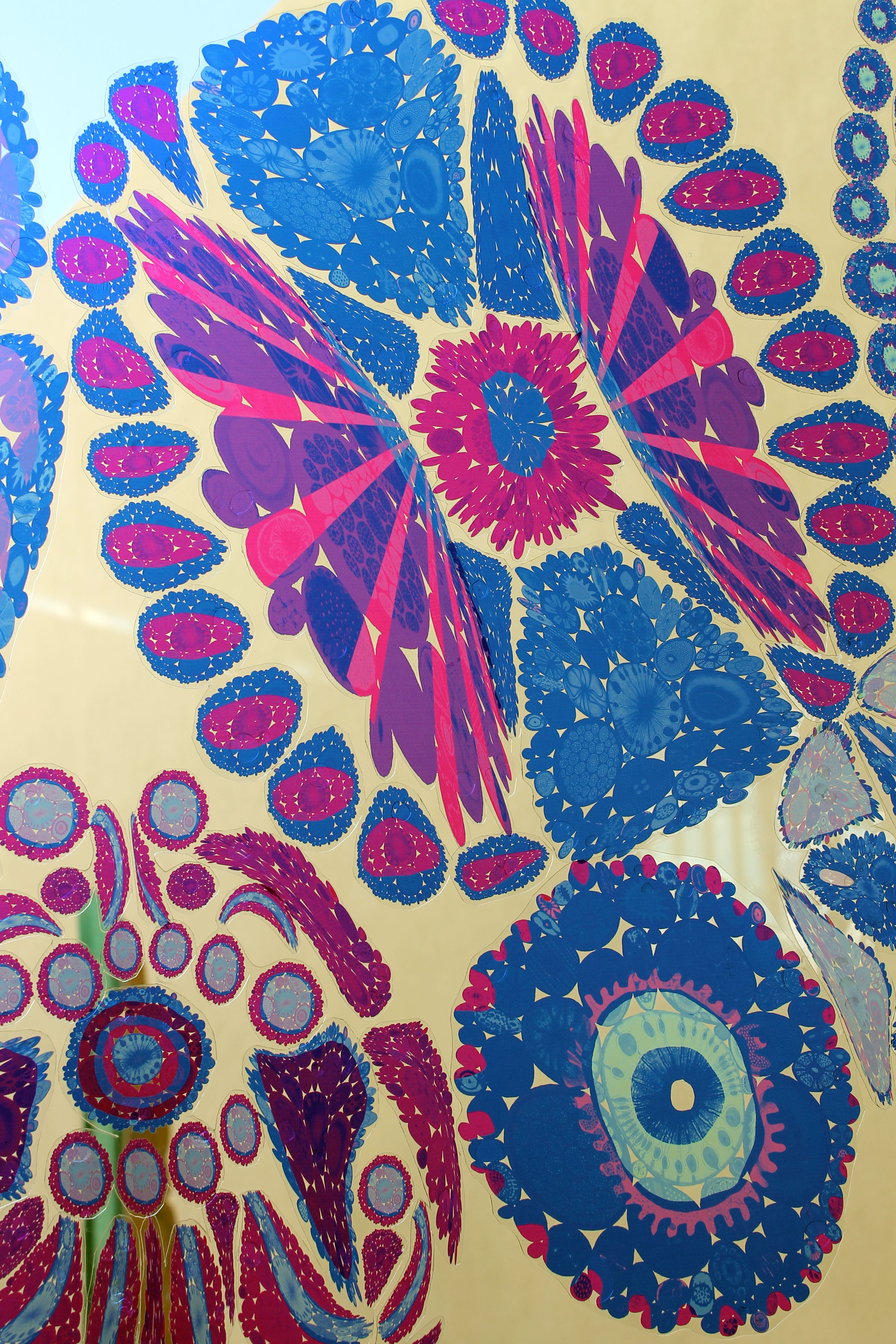
Meridiae (detail)
Albuquerque Museum’s Visiting Artist program is generously funded by the Frederick Hammersley Fund for the Arts at the Albuquerque Community Foundation.
From the artist: Meridiae (Muh-rih-dee-yay) is a symbolic highway of connection, a portal making visible the infinite ideas streaming from all over the world and into your mind at this very moment. Meridiae represents the super-stream of connected minds, worlds and ideas, re-combining and evolving through their direct impact upon you on a macro scale… yet also through subtle, infinitesimal processes, like the vitality mingling in a micro-droplet of pond water under a scientist’s microscope.
Meridiae relates to fractal design; the image of the entire piece is repeated in each and every smaller individual shape. Yet unlike a fractal, which is made of exact copies of itself at a smaller scale, Meridiae is instead made entirely of versions of itself that are unique relatives. A basic image of the overall large piece has been repeatedly digitally altered to vary the size, color, and pattern of the original, producing thousands of new versions. Upon closer inspection, one will notice that each shape has recognizably repeating characteristics.
The architectural elements of the Atrium window echo the divisions of a globe, indicating an “equator” (horizontal I-beam) and “latitude/longitude” (grid of rectangular windows). On a standard globe of Earth, a “meridian” defines longitudinal “slices” of the Earth. Meridiae multiplies exponentially to reveal infinite slices of infinite worlds, as well as our infinite connections to one another through time and space.”

About the Artist
Lea Anderson (born 1968 San Diego, California; lives Albuquerque, New Mexico), a mixed-media and installation artist, has lived and worked in New Mexico since 2003 and has discovered much during her adventures in the dramatic, colorful, and wild desert environment.
Often working in multiples and accumulations, each installation piece or body of work cultivates forms and patterns that suggest complex biological characteristics, and can be compared to botanical material, fungi, ocean life, or microbes. Repetitive patterns interweave with unique and irregular components, creating a dynamic interplay that echoes living systems.