
Chip Thomas: panaceas, promises + problems
April 1, 2024 – April 6, 2025
⇦ back to Visiting Artist homepage
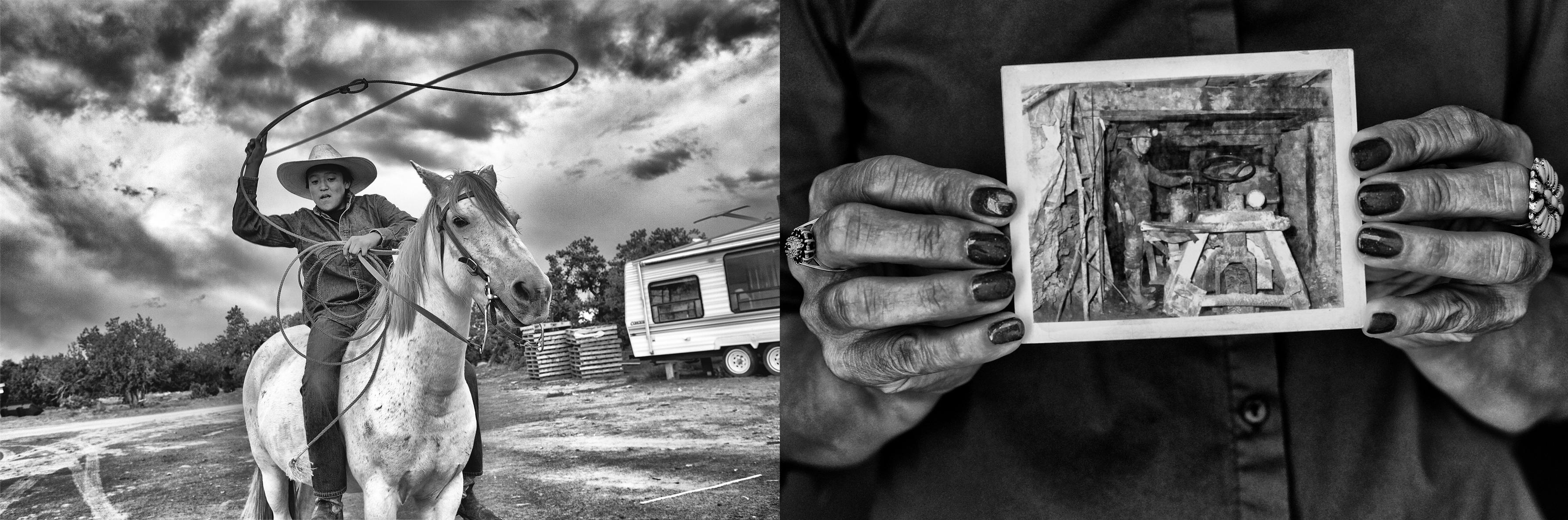
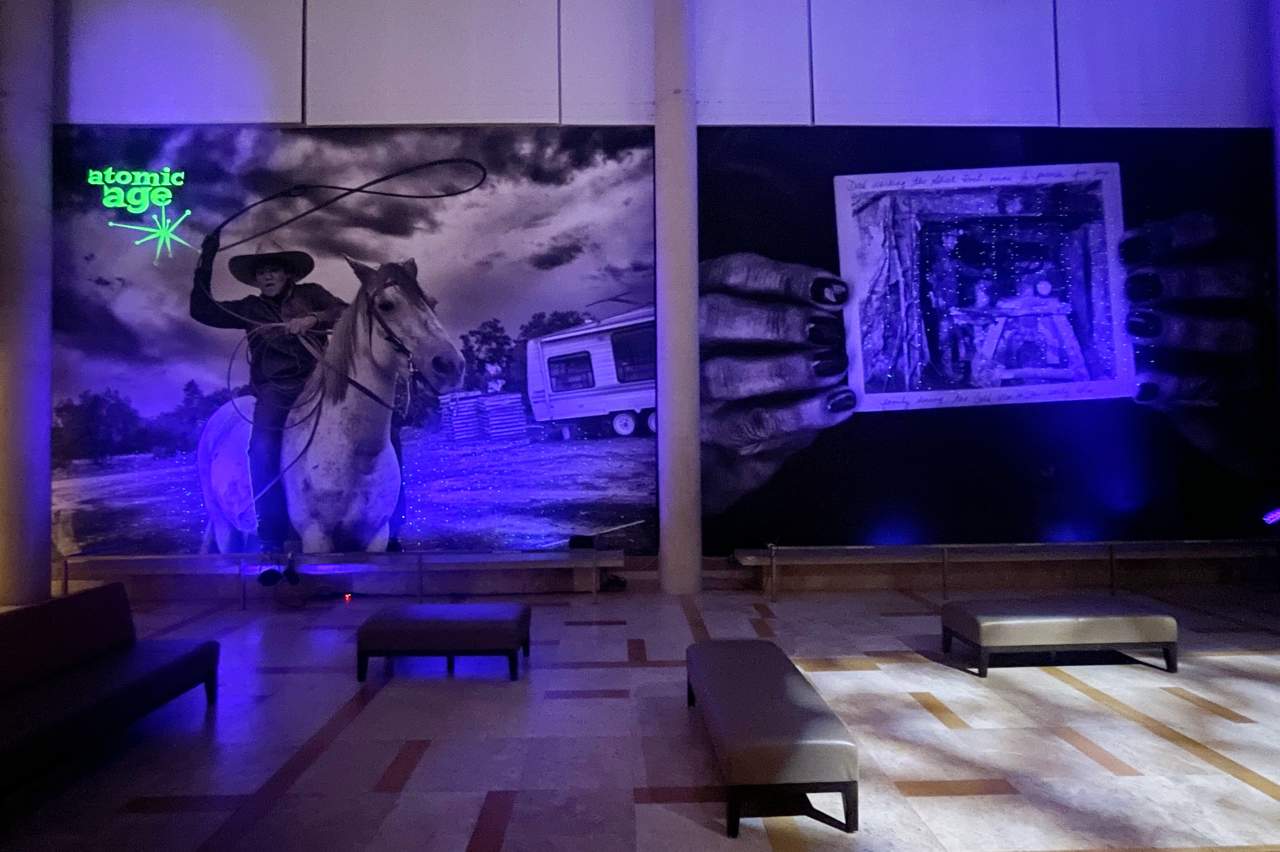
Chip Thomas, panaceas, promises + problems, 2024, vinyl photo reproduction, uranium, glass beads, sound components, 216 x 646 in.
Chip Thomas introduces panaceas, promises + problems, May 17, 2024
panaceas, promises + problems (detail)
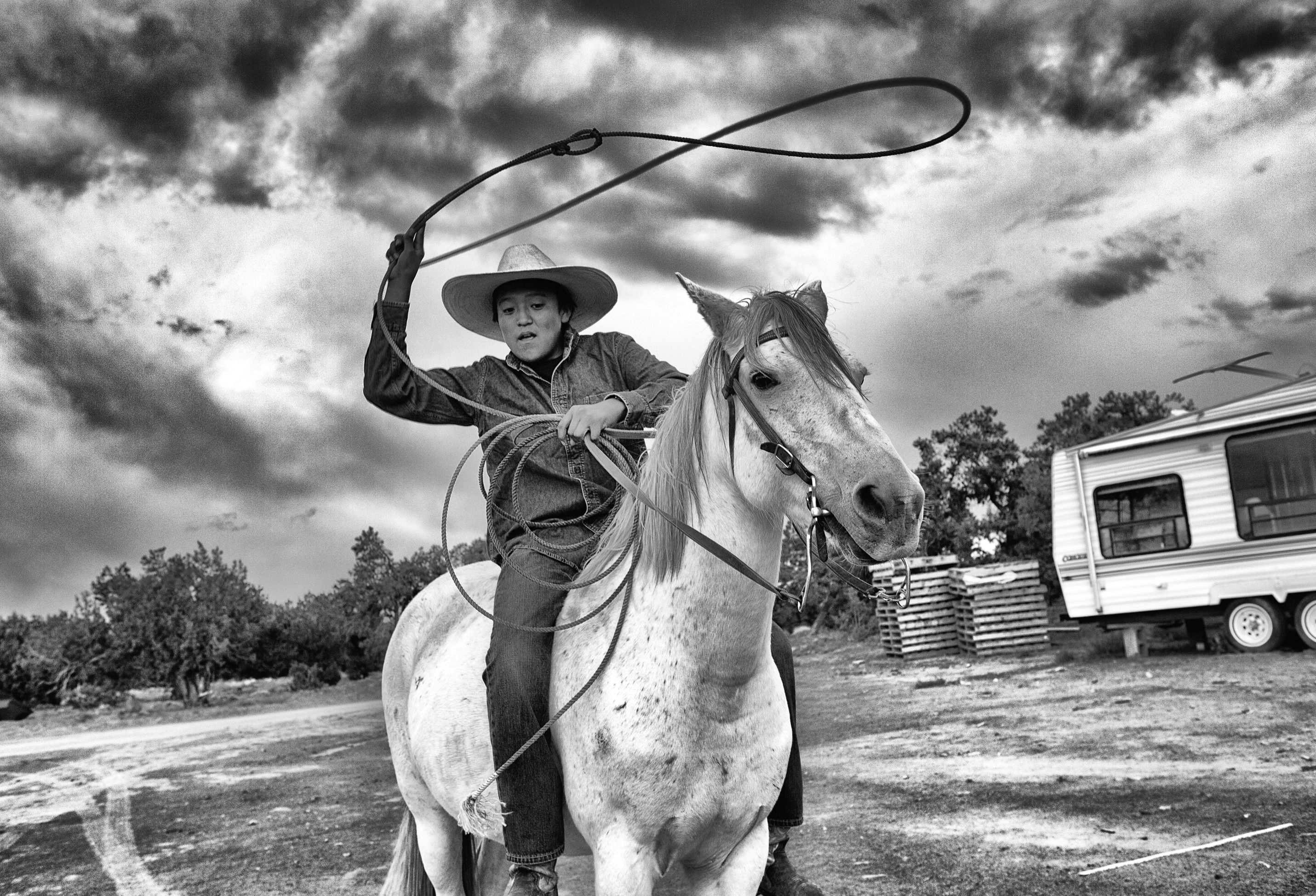
panaceas, promises + problems (detail, Craigen Jordan Jr. on horseback)
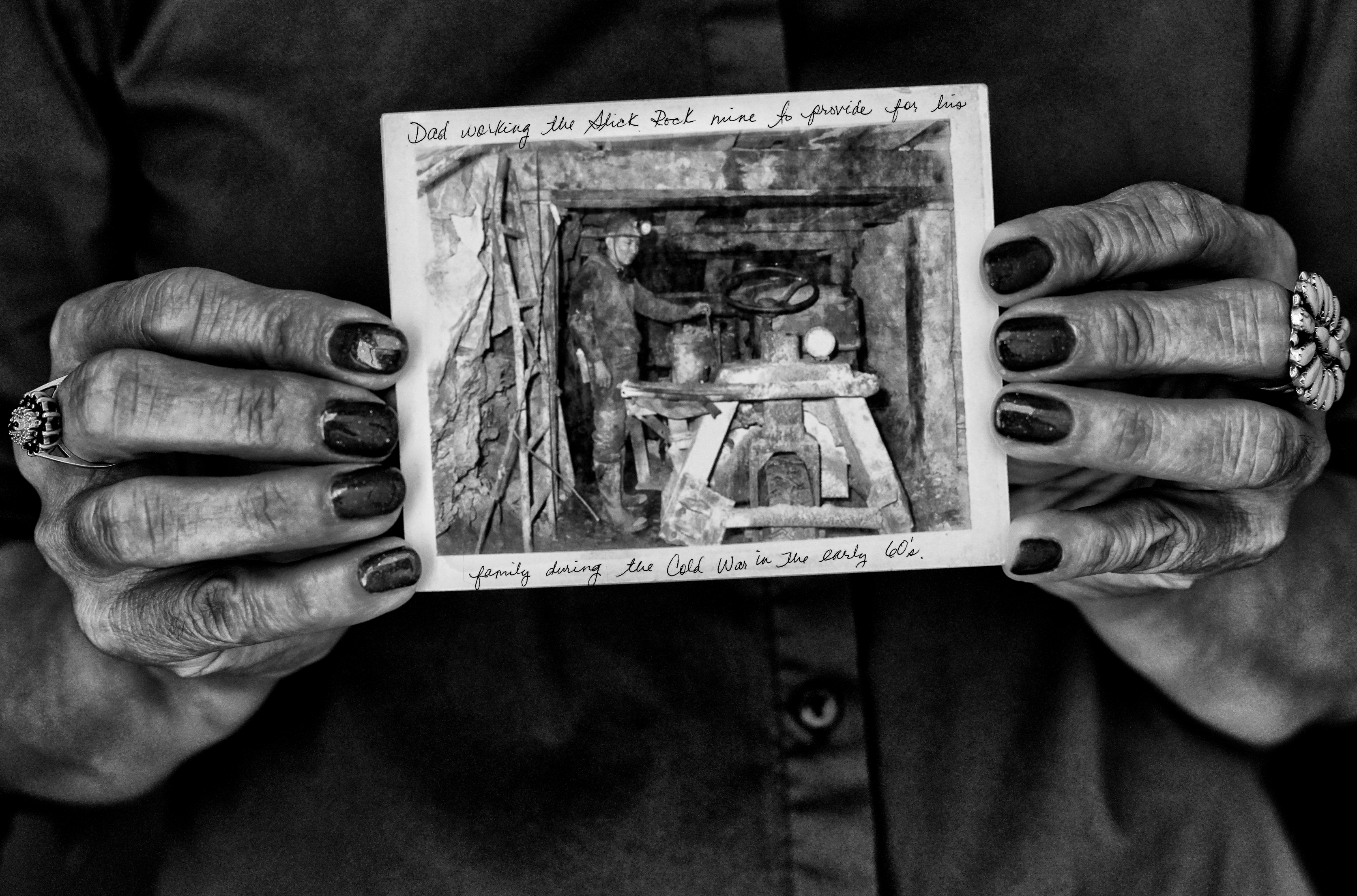
panaceas, promises + problems (detail, Cyndy John Begaye holding a photo of her dad, a uranium miner)
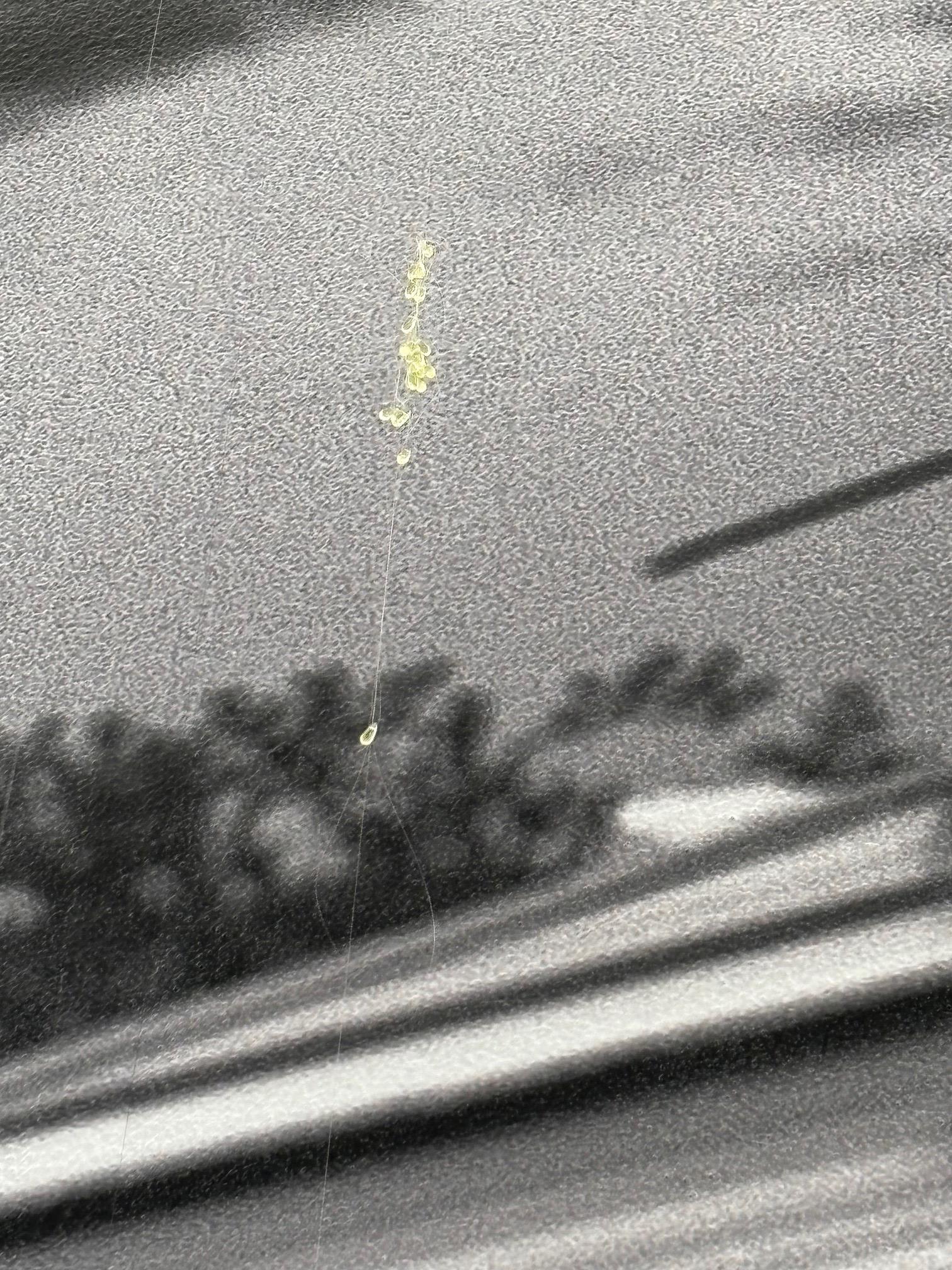
Detail of uranium bead in panaceas, promises + problems
Albuquerque Museum’s Visiting Artist program is generously funded by the Frederick Hammersley Fund for the Arts at the Albuquerque Community Foundation.
Chip Thomas’ large-scale photo murals bring together images, memories, emotions, people, and stories deeply rooted in the land, history, and cultural backdrop of the Navajo Nation. Thomas often collaborates with other artists and activist organizations to bring attention to the issues that persist in many tribal nations.
Collaborating with Sabrina Manygoats, Thomas’ installation activated the Museum’s lobby, engaging with the history of uranium mining and its ongoing impacts on the people and communities of New Mexico and the Southwest. The photo on the left depicted a young vibrant Craigen Jordan Jr. riding his horse at a time when there was a sense of promise at the dawning of the atomic age. The photograph on the right reflected the problems resulting from the nuclear cycle as Cyndy John Begay holds up a photograph of her father Kee John who suffered severe health consequences from working in a mine. The 597 suspended uranium glass beads represented abandoned uranium mines on the Navajo Nation signifying contamination in the active mines and in the land surrounding the mine sites.
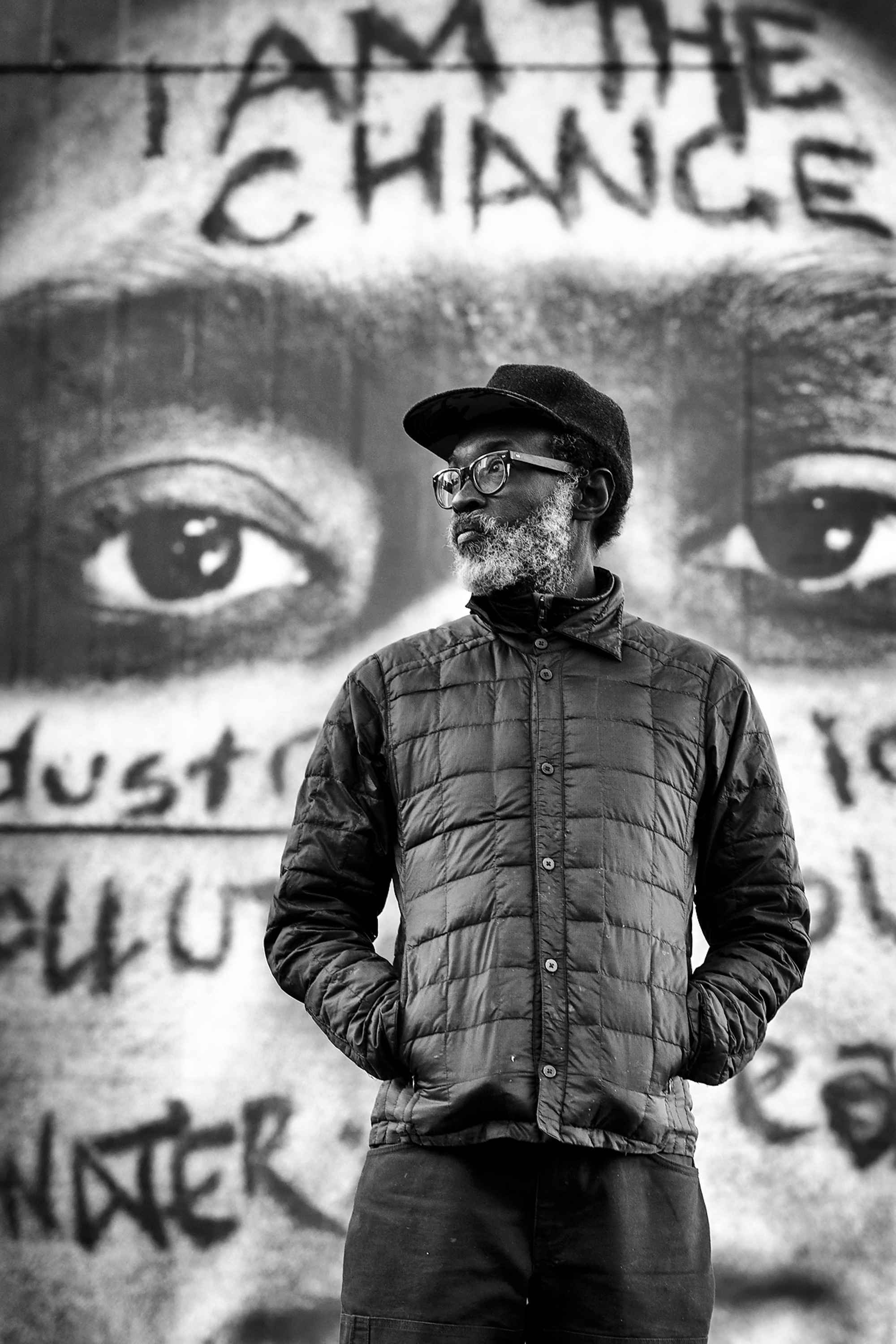
Photo courtesy of jetsonorama.
About the Artist
Chip Thomas (born 1957 Raleigh, North Carolina; lives Flagstaff, Arizona), also known by his street art moniker jetsonorama, is a physician, public artist, and activist who practiced medicine in the Navajo Nation for over 30 years. He said, "In June of 2009 I started a self-funded, public art project on the Navajo Nation, Western Agency, I called Big. I went back through 22 years of negatives and started blowing photographs up larger than life and wheat pasting them onto roadside stands and abandoned buildings. I'm still amazed at the resonance this project has with people on the reservation and amongst travelers passing through. I'm thankful for having found this form of self-expression as a means of relating to the community where I've lived and worked for almost half of my life."
Thomas disrupts vast landscapes by activating large structures as canvases for murals that uplift community members as they see themselves and their stories larger than life. His murals have served as vehicles for public health announcements during the COVID-19 pandemic and as sites of collaboration with other artists and activist organizations. The murals also communicate with non-Indigenous viewers, bringing attention to the issues that persist in many tribal nations.