

Catalina Delgado-Trunk
July 1, 2012 – August 31, 2012
⇦ back to Visiting Artist homepage
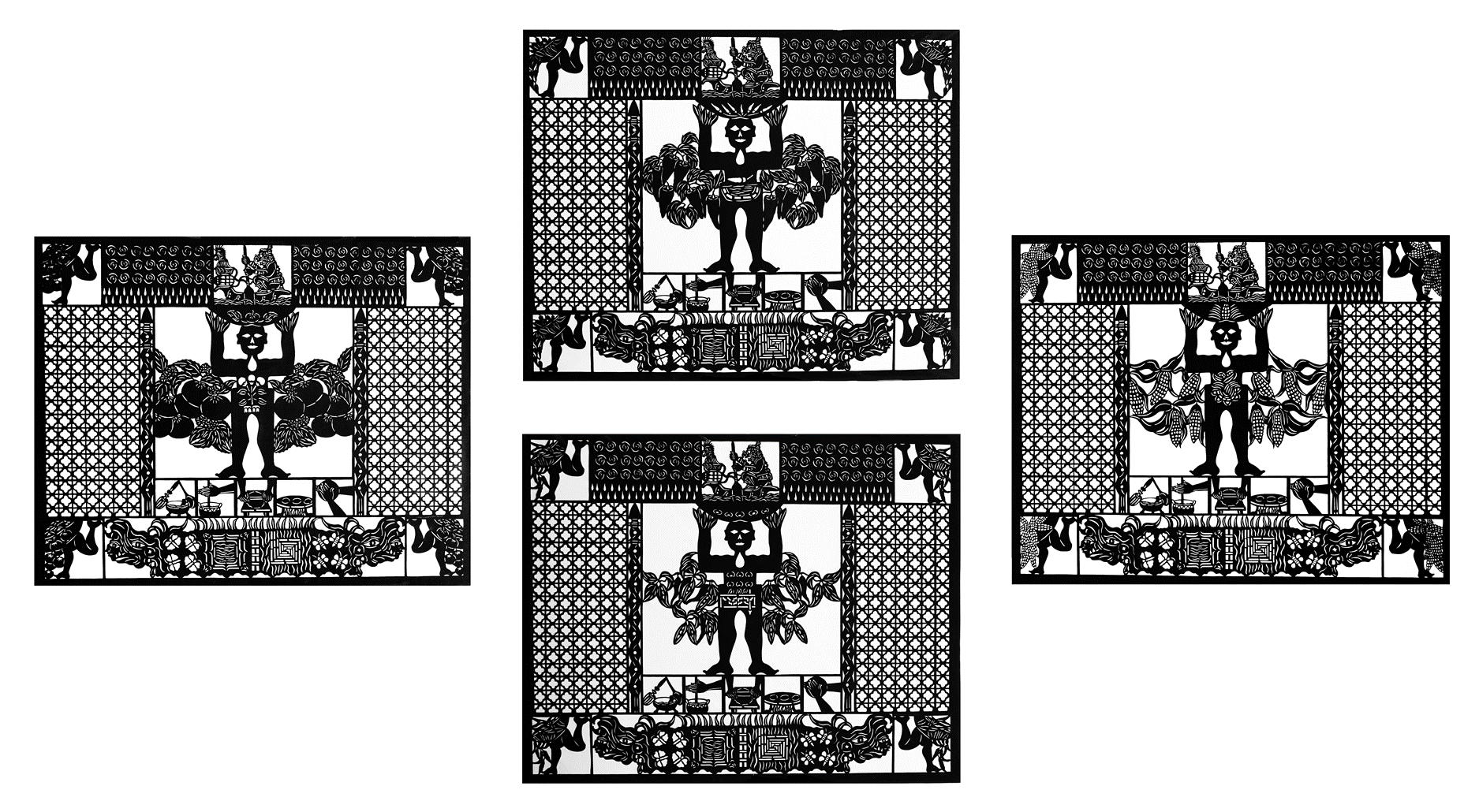
Catalina Delgado-Trunk, (clockwise from top) El señor del chile, El señor del maíz, El señor del frijol, and El señor del jitomate
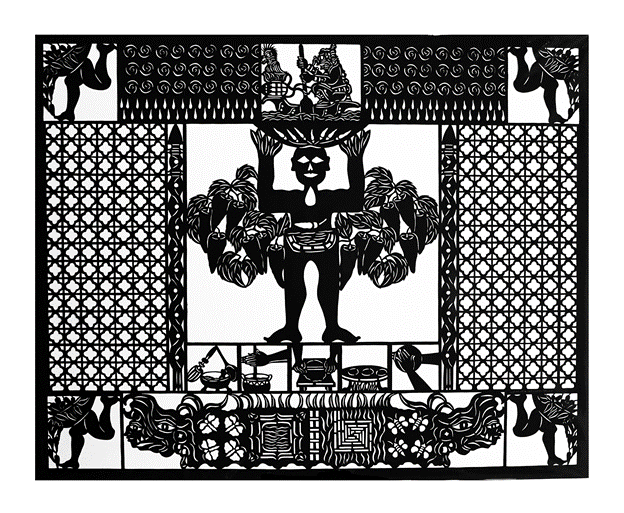
Catalina Delgado-Trunk, El señor del chile (The Lord of Chiles), North, papel picado, 31 x 38 3/4 in., museum purchase, PC2012.6.1
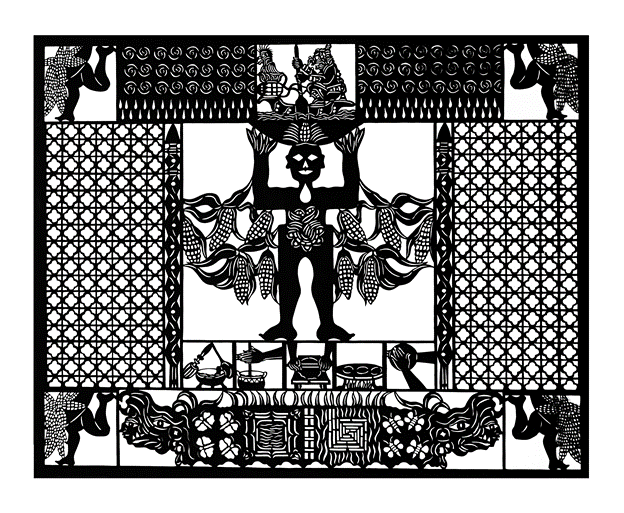
Catalina Delgado-Trunk, El señor del maíz (The Lord of Corn), East, papel picado, 31 x 38 3/4 in., museum purchase, PC2012.6.3
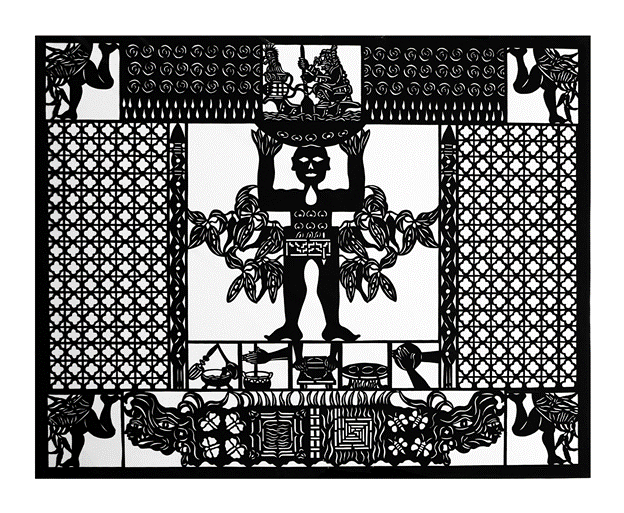
Catalina Delgado-Trunk, El señor del frijol (The Lord of Beans), South, papel picado, 31 x 38 3/4 in., museum purchase, PC2012.6.2
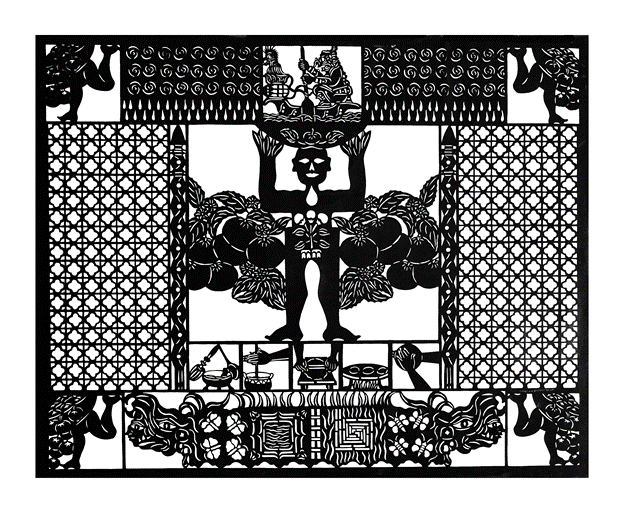
Catalina Delgado-Trunk, El señor del tomatl (The Lord of Tomatoes), West , papel picado, 31 x 38 3/4 in., museum purchase, PC2012.6.4
Albuquerque Museum’s Visiting Artist program is generously funded by the Frederick Hammersley Fund for the Arts at the Albuquerque Community Foundation.
Rooted in the Otomí tradition of San Pablito in the Mexican state of Puebla and installed in conversation with the exhibition Exploring Art of the Ancient Americas: The J. Bourne Collection, Catalina Delgado-Trunk’s four, large-scale papel picado works serve as visual depictions of the “seed souls” of four of the major foods developed in ancient times in Mesoamerica.
El señor del chile is the seed soul associated with chile peppers and the Northern directional point. The topographic glyph on the torso of the central figure depicts Chilapa (“at the river of chiles”).
El señor del maíz is the seed soul associated with maize or corn and the Eastern directional point. A sacred glyph for corn appears on the torso of the central figure. Corn is known as the “golden king” and was and is the most basic food throughout Mesoamerica.
El señor del frijol is the seed soul associated with beans and the Southern directional point. The topographic glyph on the torso of the central figure depicts Villa de Etla (“town of beans”).
El señor del jitomate is the seed soul associated with tomatoes and the Western directional point. The topographic glyph on the torso of the central figure depicts Tomatla (“place with an abundance of tomatoes”).

Photo courtesy of the artist.
About the Artist
Catalina Delgado-Trunk’s (born 1945, Mexico City, Mexico; lives Albuquerque, New Mexico) work is rooted in the folk arts that reflect the traditions, myths, and history of the culture of her native Mexico. She recasts traditional images and techniques in a modern aesthetic, integrating traditional art forms—such as papel picado (cut paper)—with contemporary themes.