
Food Safety
Best practices for avoiding food contamination and foodborne illnesses.

The food supply in the United States is among the safest in the world. However, when certain disease-causing bacteria or pathogens contaminate food, they can cause foodborne illness, often called “food poisoning.”
It is estimated that each year roughly 1 in 6 Americans (or 48 million people) gets sick, 128,000 are hospitalized, and 3,000 die of foodborne diseases.
More than half of all foodborne illness outbreaks in the United States are associated with restaurants, delis, banquet facilities, schools, and other institutions.
Food managers are in a key position to influence the policies and practices in their restaurant that affect food safety.
To prevent food poisoning from occurring in your facility, follow the four steps to food safety: Clean, Separate, Cook, and Chill. Keep hands and surfaces clean, keep risky foods separate from other foods, cook food properly, and refrigerate promptly.
Clean

Our hands naturally carry bacteria on them. If we transfer those bacteria to food, the food is a good place for those bacteria to grow! On the other hand, foods contain a certain amount of bacteria on them as well, especially raw foods. It is important not to let the bacteria from raw foods stay on your hands where you may transfer them to your mouth or other foods.
When should food employees wash their hands?
Handwashing is required immediately before, during or after activities that contaminate the hands.
Hand sanitizers should not be used in place of adequate handwashing in food establishments.
Always be sure to rinse fresh produce, including those with skins and rinds. Scrub firm produce with a clean produce brush.
Food service workers should not prepare food if they are sick with diarrhea, vomiting, or nausea; have an infection, wound or boil on their hands, arms or face; or have one of the reportable illnesses (Hepatitis A, E.coli, Norovirus, Shigella, or Salmonella or Salmonella Typhi (Typhoid)).
The Food and Drug Administration (FDA) has developed the Employee Health and Personal Hygiene Handbook to encourage practices and behaviors that can help prevent food employees from spreading viruses and bacteria to food. The handbook contains a sample agreement to inform food employees of their responsibility to notify the person in charge when they experience any of the conditions listed so that the person in charge can take appropriate steps to preclude the transmission of foodborne illness.
For additional information on employee health and personal hygiene, please visit:
Retail Food Protection: Employee Health and Personal Hygiene Handbook | FDA
Separate
Separate raw meats from other foods.
When storing and preparing food, separate raw meat, poultry, seafood, and eggs from other foods, especially foods that won’t be cooked like salad vegetables. Be sure to never place salads, other ready-to-eat foods, or cooked food on a plate that previously held raw meat, poultry, seafood, or eggs. Make sure that you don't allow the juices associated with raw meat and poultry to contaminate other areas of your kitchen. Avoid reusing marinades used on raw foods unless you bring them to a boil first.
Cook
Cook foods to a safe internal temperature. Use a food thermometer to know when foods reach a safe internal temperature.

E. coli O157:H7 is a bacteria that may be present in raw ground meat. Because of this, it is important that hamburgers and other ground meat products be cooked thoroughly to kill this bacteria. Ground beef must reach an internal temperature of 160°F in order to ensure that the bacteria has been killed. The interior of the meat may turn brown before this temperature is reached, making it look like the hamburger is done, but you cannot assure its safety until the internal temperature reaches 160°F.
Chill
Refrigerate foods promptly. Eggs may contain bacteria, Salmonella, in their yolks, and so it is very important never to leave eggs at room temperature, or you will allow the bacteria to multiply and grow.

Preventing Pests
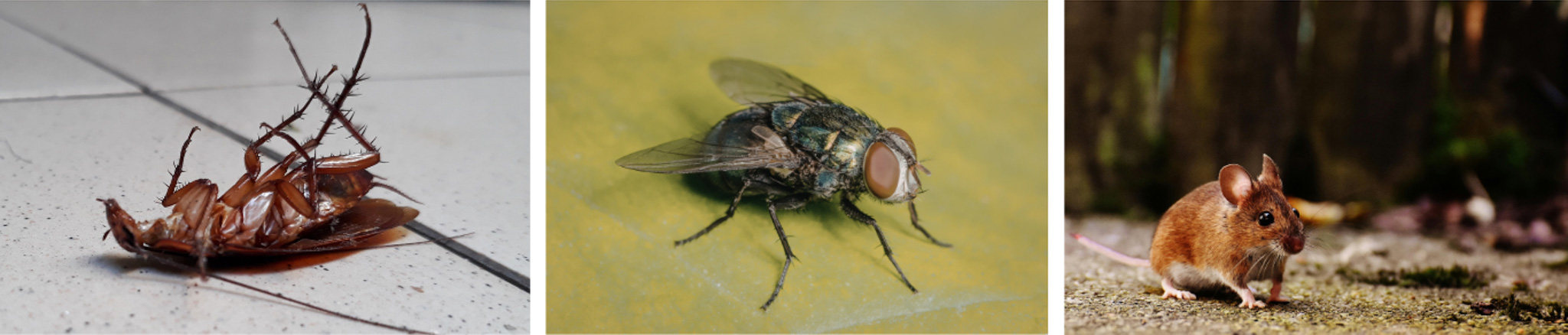
Preventing pests from entering your establishment is the best way to avoid a pest infestation. Follow these simple steps to avoid a pest infestation:
Step 1: Prevent entrances
Pests can find their way in through the smallest places and holes. To help prevent pests from entering your establishment, fill in any holes or cracks in your walls and ceiling, both on the inside and outside of the building.
Keep windows and doors closed as much as possible. You can also use an air curtain at entrances to help keep bugs from flying or crawling into your facility.
Step 2: Keep it clean
Remember to clean and sanitize your facility often to remove any extra food or debris that could be appealing to pests. Cleaning areas, including non-food-contact surfaces, is critical to deterring pests from entering your establishment.
In addition to cleaning, you should take out the garbage before it gets too full. Also, keep a tight-fitting lid on garbage can receptacles when they are not in use. Remember to do this for your outside dumpster, too!
Be sure to store all garbage inside dumpsters. If you notice your dumpster getting full before your garbage collector is scheduled to take it, contact your waste management collector to see if they can pick it up early.
Step 3: Eliminate food, water, and shelter sources
Pests will be attracted to places that are warm and have food and water. It’s important to eliminate these sources so pests won’t be attracted to your facility.
Store food at least 6 inches above the ground and keep equipment sealed to the counter or floor, or mount equipment so it is at least 6 inches above the counter or ground. Clean under equipment often!
You should also check food that is received into your facility for signs of pests. When receiving food, check for gnaw marks on packaging, droppings around the packaging, or a strong smell of ammonia (indicates rat urine). Reject any shipments that you think could be contaminated by pests.
Download our pest management flyer: