Recycling ProcessEver wonder what happens to your recycling after it goes in your bin? See the step-by-step process the City of Albuquerque uses for sorting and preparing recycled material for remanufacturing.https://www.cabq.gov/solidwaste/recycling/recycling-processhttps://www.cabq.gov/++resource++plone-logo.svgRecycling ProcessEver wonder what happens to your recycling after it goes in your bin? See the step-by-step process the City of Albuquerque uses for sorting and preparing recycled material for remanufacturing.https://www.cabq.gov/solidwaste/recycling/recycling-processhttps://www.cabq.gov/++resource++plone-logo.svg
Recycling Process
Ever wonder what happens to your recycling after it goes in your bin? See the step-by-step process the City of Albuquerque uses for sorting and preparing recycled material for remanufacturing.
Follow your recycling after it leaves the curb! From the moment your cart is emptied into a collection truck to the time recyclable materials are baled and shipped for remanufacturing, every item goes through a detailed sorting process. Explore each step below to see how people and technology work together to separate recyclables, remove contamination, and prepare materials for a second life.
When recycling is collected from your home and loaded into our trucks, it's taken to the BARCO Material Recovery Facility (MRF) located at 5029 Edith Blvd NE. Once the materials arrive, they are sorted, processed, and prepared for shipping to a remanufacturing facility. See a breakdown of that process below.
1. Receiving & Weighing
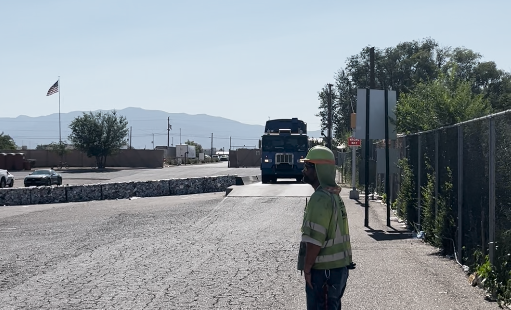
When trucks arrive at the BARCO material recovery facility (MRF), they enter through a single entrance to weigh their contents. All Solid Waste Management Department (SWMD) trucks can be used for both trash and recycling. Trucks and drivers are assigned a route each day and either handle trash or recycling, but never both on the same day. Most days, the same trucks are used for the same routes. Trucks are weighed when they enter the MRF so that SWMD can track recycling tonnage.
2. Unloading
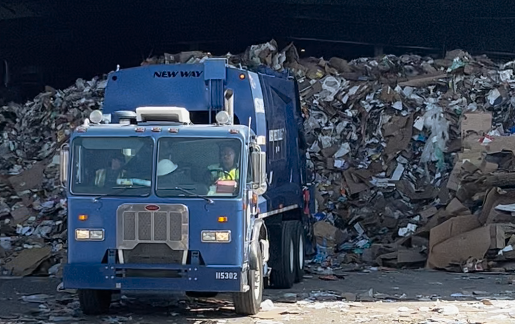
Once the truck enters the facility, the driver backs the rear end of the truck to the pile of all received material at the facility. Work in the area is briefly suspended to ensure safety. The driver will dump the load into the pile and then exit the vehicle to ensure all material has been ejected from the hopper (the back of the truck). After the load has been emptied, the driver takes the truck to a safe location and empties any material still stuck inside the hopper after dumping.
3. Conveyor Belt Loading
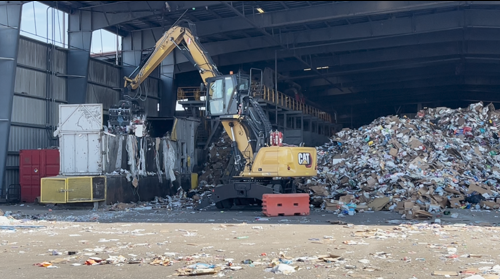
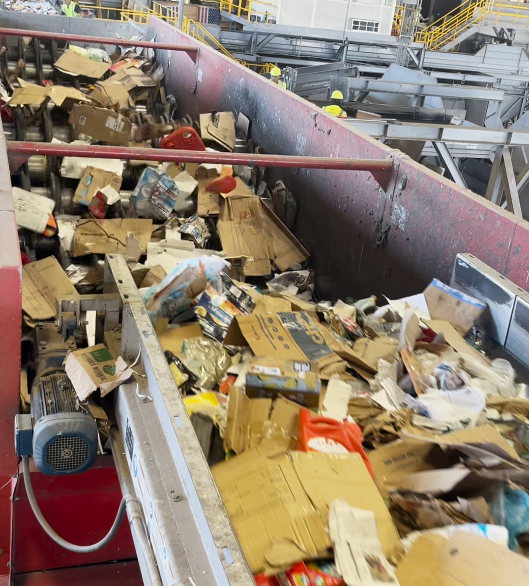
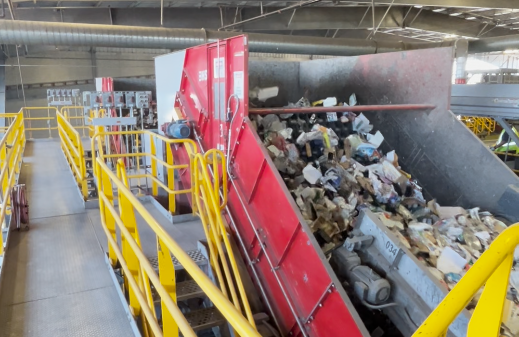
Non-recyclable material mixed in with received recycling is called contamination. All received material may have some level of contamination. Contamination lowers the reusability of the recyclable material when it’s mixed in. To clear contamination, we sort all received material through a thorough process. It starts by loading all received material on a conveyor belt with an industrial excavator, commonly referred to as a material handler.
4. Conveyor System Entry
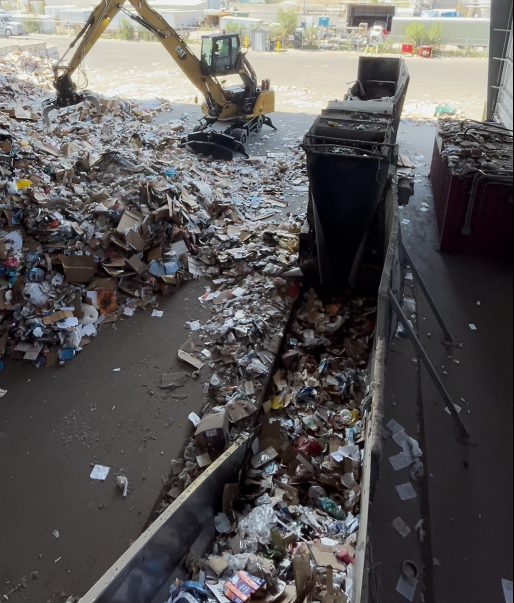
The material is now on the conveyor belt system. The first thing it does is go up about 20 feet. The material is elevated to a platform so it can be sorted. The conveyor belt will eventually bring the sorted material to the bottom at the end of the process.
5. Initial Sorting - Manual
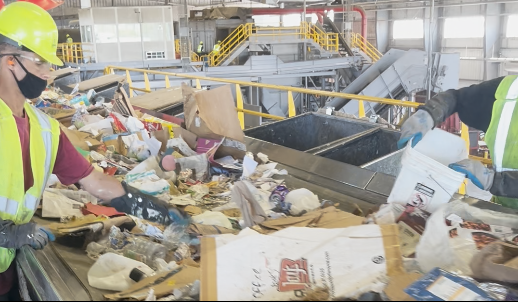
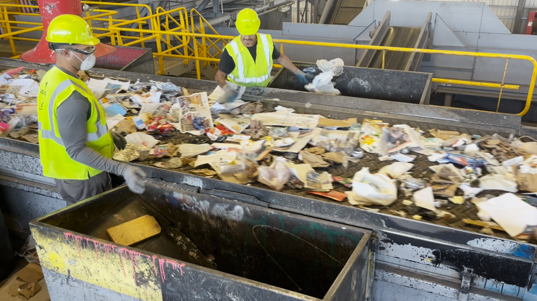
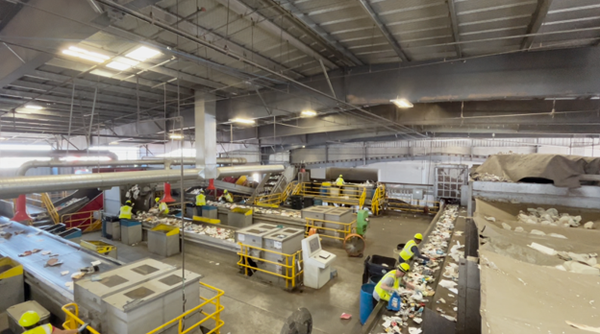
The first sorting done at the facility is done by hand. A team of 4-5 workers identifies and removes the most egregious contamination items. They’re tasked with removing as much of the non-recyclable waste as possible. Some of the most common items identified at this stage include pizza boxes (grease makes them not suitable for recycling), styrofoam (SWMD doesn’t recycle styrofoam), and non-recyclable waste (trash). Their goal is to ensure the vast majority of the material that passes by them is, in fact, recyclable.
6. Automated Cardboard Recycling
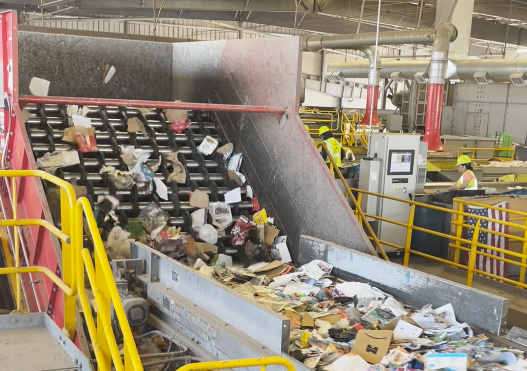
The second step in the sorting process separates cardboard from the single stream. The wheels in the machine take the cardboard up and over the compartment below. The vast majority of the recycling that makes it over the wheels is cardboard. What falls into the compartment below is the rest of the single stream and will continue to be sorted at the next stages.
7. Second Phase Manual Sorting
Now that the majority of cardboard has been sorted, the waste stream goes back to human sorting. Another team of sorters is once again focusing on non-recyclable materials that cannot be sorted by automated machines. They’re looking for problematic items that could potentially cause catastrophic damage to the sorting machines. These are commonly known as “tanglers.” One of the worst “tanglers” is plastic bags. The bags can wrap around the arms of the sorting machine and can force the MRF to temporarily shut down while the bags are untangled.
8. Automated Rigid Plastics Sorting
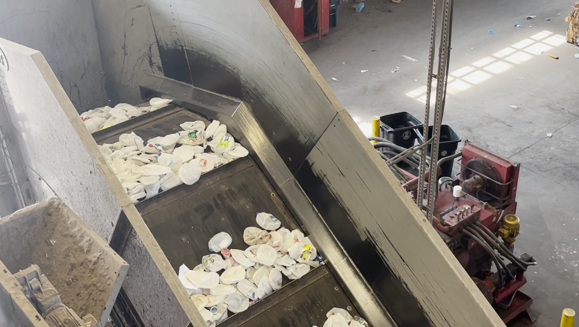
The waste stream now goes through a second automated process focused on sorting out rigid plastics. The rest of the stream falls through the rollers and continues on along the conveyor belt system.
9. Automated Metals and Plastics Sorting
Two further automated sorting processes will sort the remaining plastics and all metals. All of the materials sorted through automation will appear on separate conveyor belts in the next step of the sorting process.
10. Separated Manual Sorting
Now that all the material has been sorted by machine, there is yet another layer of manual sorting. This level of sorting will remove any objects that shouldn’t be in the separated material stream. Those materials are set aside in the bins next to the 3 conveyor belts. Fans are also used in this phase of the process to blow any remaining paper that wasn’t sorted out earlier in the process. One remaining line continues to sort all remaining unsorted recyclable material. This sorting ensures that all non-recyclable material is separated from the stream.
11. Baling
Once the separated recycling stream (in this case, rigid plastics) has been completely sorted and verified, it is once again elevated before it’s dropped down a chute for the final packing process before being shipped off. It will be compressed into a cube for efficient shipping.
12. Prepping for Shipping
Now that the material has been baled into a cube, it is at its maximum efficiency for shipping. A worker will check the cubes for visible contamination and prepare them to be loaded onto trucks that will take the final product to remanufacturing facilities, where it will be remanufactured.