Safer Spaces OrdinanceThe City of Albuquerque is committed to making sure everyone can safely access public services, visit local businesses, and participate in their community without fear.https://www.cabq.gov/mayor/safer-spaces-ordinancehttps://www.cabq.gov/++resource++plone-logo.svgSafer Spaces OrdinanceThe City of Albuquerque is committed to making sure everyone can safely access public services, visit local businesses, and participate in their community without fear.https://www.cabq.gov/mayor/safer-spaces-ordinancehttps://www.cabq.gov/mayor/images/mayorsaferplaces.jpg
Safer Spaces Ordinance
The City of Albuquerque is committed to making sure everyone can safely access public services, visit local businesses, and participate in their community without fear.
Safer Places
The Safer Community Places Ordinance creates clear guidelines to help protect privacy, support public safety, and ensure residents can access important services. The ordinance establishes consistent expectations for City facilities, community spaces, and businesses while respecting the rights of everyone who lives, works, and visits Albuquerque.
By establishing these protections, Albuquerque is working to ensure that community spaces remain places where people can access services, support their families, and participate fully in the life of the city. Albuquerque is strengthening trust between residents, local businesses, and public institutions. The goal is simple: keep community spaces focused on serving the people who rely on them every day.
What is the Safer Community Places Ordinance (Bill O-26-15)?
The Safer Community Places Ordinance creates clear guidelines to help protect privacy, support public safety, and ensure residents can access important services. The ordinance establishes consistent expectations for City facilities, community spaces, and businesses while respecting the rights of everyone who lives, works, and visits Albuquerque.
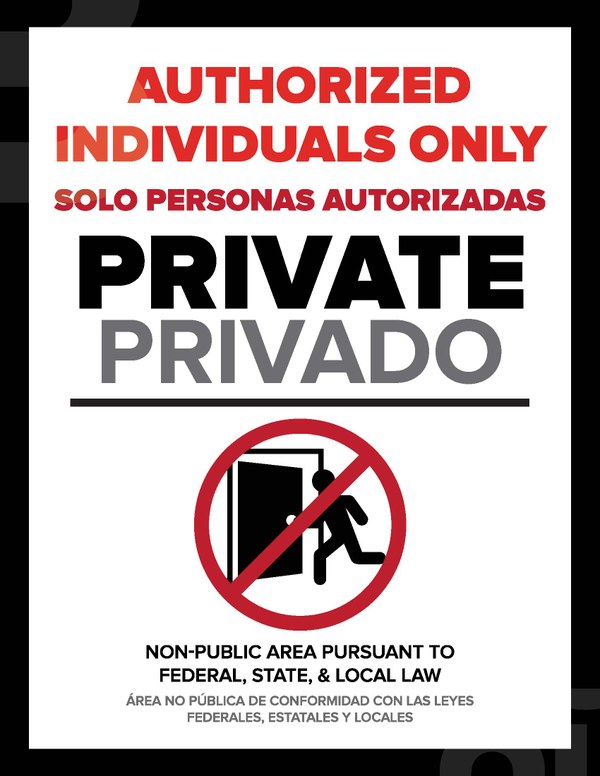
The ordinance requires all businesses, including Safer Community Places, to display signs designating private areas at the workplace and to provide notice to employees of upcoming inspections of I-9 Employment Eligibility Verification forms or other employment-related records, including notifying affected employees that their I-9 or employment-related documents were deemed deficient. Employers are also required to provide notice any time a law enforcement agent who is conducting or supporting immigration enforcement is present at the workplace except as part of an I-9 inspection. The ordinance requires larger businesses to draft safety plans protecting employees, customers, and others present at the business.
The ordinance prohibits Safer Community Places from providing voluntary consent to law enforcement agents who are engaged in or supporting immigration enforcement from entering private areas of a business and from accessing, reviewing, or obtaining federally protected student or patient records.
Which businesses are subject to the Safer Community Places Ordinance?
All businesses in the incorporated areas of the City of Albuquerque.
All businesses, including those designated as “Safer Community Places”, are considered “businesses seeking to apply for or renew a City Business License." Under the City of Albuquerque Code, businesses must obtain a Business License before offering goods or services in the city, and must renew their Business License annually.
Under the ordinance, only businesses with 5 or more employees must draft a written “Safety Plan” to protect from unwanted intrusion of law enforcement into private areas of a business.
Under the ordinance, only businesses designated “Safer Community Places” are prohibited from providing voluntary consent for law enforcement agents conducting or supporting immigration enforcement to enter private areas, or to access, review, or obtain student or patient records at the business.
All businesses must follow the new ordinance and Safer Community Places have additional requirements. Safer Community Places under the ordinance include:
Hospitals and other healthcare facilities, including private and public hospitals, urgent care clinics, or community healthcare clinics, and similar establishments providing healthcare services to the public.
Schools, including all private, charter, and public schools.
Places where children routinely gather, including schools and daycares.
Designated disaster and emergency response sites, such as freezing or warming response centers or centers created for victims of fires and floods.
City owned or operated facilities, such as City of Albuquerque’s City-owned or operated facilities.
Community resource centers and direct service providers, including legal service providers, homeless shelters, sexual and domestic violence providers, family justice centers, and human trafficking service providers.
Work zones and construction sites on City property and within city rights of way, including construction sites operated by private construction businesses.
Other similar locations whose purpose is to promote the health, safety and welfare of residents as determined by the City.
In the ordinance, the terms “business” and “employers” are used interchangeably.
Does the Safer Community Places Ordinance Require Employers to Defy Federal Requirements or Officers?
No. Compliance with Ordinance O-26-15 does not require any employer to violate federal law, or to interfere with the lawful conduct of law enforcement officers in any fashion. At most, it may require an employer to decline a federal agent’s request for voluntary cooperation when unsupported by the necessary judicial authorization. The ordinance applies only “except as otherwise required by federal law” and does not restrict or limit an employer’s compliance with any memorandum of understanding governing participation in the federal E-Verify program.
Information & Requirements for All Businesses Seeking to Apply For or Renew a City Business License
Signage Delineating Public & Non-public Spaces
Display signage delineating public and non-public spaces. All signage should be displayed in a visible location, clearly marking the boundaries between public and private areas of a business. For example, signs should be posted at all entrances to private areas. Signage should stay up during all hours of operation.
Creating Safety Plans for Businesses with Five or More Employees
Businesses with five or more employees are required to develop and maintain a written “Safety Plan” that protects workers, customers, and others present at the business from unwanted intrusion by law enforcement into the private spaces of a business.
Employees of the business should be notified that the business has created a Safety Plan, and the plans should be made available to all employees of the business in the language most often used to communicate with employees.
The City recommends adoption of the guidance and plans created by the following entities, any of which would satisfy the requirements of a Safety Plan under the City ordinance:
Providing Notice of I-9 Inspections & Results, Other On-site Immigration Enforcement Activities by Law Enforcement Agents
The ordinance requires employers to provide written notices to all employees of an inspection by a government agency of I-9 Employment Eligibility Verification forms (“I-9 forms”) or other employment records. Employers must also provide separate written notice of the results of inspections to those “affected workers” whose records are found to be deficient or lacking work authorization.
Written notice of inspection of I-9 forms or other employment records
Issued within 24 hours of an employer receiving a “Notice of Inspection” of I-9 forms or other employment records by a federal government agency;
Posted in a conspicuous and accessible location;
Reasonable attempts must also be made to provide individual notice to each current employee, and to the employee’s “authorized representative” (exclusive collective bargaining representative, if any), in the language usually used to communicate with the employee on employment matters;
Includes the name of the federal government agency conducting the inspection;
Includes the date the employer received the Notice of Inspection;
States the scope of the federal agency’s notice of inspection to the extent known;
Includes a website address provided by the City offering information from community organizations about immigrant/workers’ rights; and
Includes a copy of the “Notice of Inspection” provided by the federal government agency.
City of Albuquerque has provided a template that employers may use to comply with this provision.
Written Notice of Inspection Results to Affected Employees
Written notice is require to those affected employees who the federal government has determined lack work authorization or deficient authorization documents. The following are the requirements of the notice.
Issued within 24 hours of notice from the federal government agency that an employee’s work authorization documents do not establish that the employee is authorized to work in the United States, an employer shall provide the affected employee, and their authorized representative (exclusive collective bargaining representative), notice of the results of the inspection of I-9 forms or other employment records;
Relates only to that individual affected employee;
Delivered to the employee by hand at the workplace if possible, or by mail and e-mail (if known) if hand delivery is not possible;
Contains a description of any and all deficiencies or other terms identified in the written immigration inspection notice related to the employee;
States the time period for correcting any potential deficiencies identified by the immigration agency;
States the time and date of any meeting with the employer to correct any identified deficiencies;
States that the employee has the right to representation during any meeting scheduled with the employer.
City of Albuquerque has provided a template that employers may use to comply with this provision.
Other Notice Requirements
Employers must provide notice to current employees, contractors, and others performing paid work for the employer when a law enforcement agent engaging in or supporting immigration enforcement is present.
Notice may be provided by electronic media such as email;
Use the language normally used by the employer to communicate employment related information to employees;
Must issue within 24 hours of the law enforcement presence;
State the name of the federal government agency present;
State the date the law enforcement agent was present; and
Describe the nature of the law enforcement agent’s actions.
City of Albuquerque has provided a template that employers may use to comply with this provision.
Information & Requirements for “Safer Community Places”
What should a "Safer Community Place" do if a law enforcement agent conducting immigration enforcement seeks to enter a private area inside of their business?
Safer Community Places shall not give “voluntary consent” to a law enforcement agent engaged in or supporting immigration enforcement to enter private, nonpublic areas of the business.
This provision does not apply if the law enforcement agent:
enters a private area without the consent of the business;
presents a valid judicial warrant;
acts under “exigent circumstances” exceptions to the Fourth Amendment, such as preventing imminent threat to bodily harm, or hot pursuit of a suspect fleeing into a private area of a business.
What is a “private” or “non-public” area of a business?
A “private” or “non-public” area is a space in the business that members of the general public are not normally permitted to enter or access, such as areas restricted to employees or management. A “public” area of the workplace is a location that the general public is ordinarily allowed to access or enter, such as a restaurant’s dining area.
Every business is different, and whether a business location, or any portion of it, qualifies as a private or non-public area must be determined on a case-by-case basis, based on the specific facts and circumstances of each situation. Businesses may wish to consult with their own legal counsel about fourth amendment protections relating to “private” or “non-public” areas at the workplace.
What does it mean to provide “voluntary consent” allowing law enforcement to access private areas of a business?
In general, for consent to be “voluntary”, it should not be the result of coercion or duress, either express or implied. In other words, consent is not voluntary if it is given because of direct or implied threats or other forms of coercion or intimidation.
Someone gives voluntary consent to enter a private (non-public) area of a business if they ask or invite an immigration officer to enter that area. This can be shown by what they say or by their actions, such as freely opening a door for the officer.
The Ordinance does not require or encourage any employee to physically block or otherwise interfere – in any fashion – with a law enforcement agent to show that they did not give voluntary consent.
What should a "Safer Community Place" do if a law enforcement agent engaged conducting immigration enforcement seeks to access, review, or obtain student or patient records located at a business?
Safer Community Places shall not give “voluntary consent” to a law enforcement agent engaged in or supporting immigration enforcement to access, review, or obtain student or patient records located at a business. Some of these records may already be subject to federal protections, such as the Federal Educational Rights Privacy Act or the Health Insurance Portability and Accountability Act.
This provision does not apply if the law enforcement agent accesses, reviews, or obtains student or patient records without the consent of the business.
This provision does not apply if the law enforcement agent:
Provides a valid judicial subpoena for the student or patient records.
Provides a valid judicial warrant for the student or patient records.
Provides a valid judicial order for the student or patient records.
Businesses may wish to consult with their own legal counsel about compliance with valid judicial subpoenas, orders, and warrants.
What does it mean to provide “voluntary consent” in the context of student or patient records?
For consent to be “voluntary,” it should not be the result of coercion or duress, either express or implied. In other words, consent is not “voluntary” if it is given because of direct or implied threats or some other form of duress.
Examples of “voluntary consent” in the context of student or patient records include:
Freely telling a law enforcement agent conducting or supporting immigration enforcement that they may review student or patient records.
Voluntarily directing the law enforcement agent engaged in or supporting immigration enforcement to the location of student or patient records.
Voluntarily accessing a computer or opening a file cabinet containing student or patient records for the law enforcement agent engaged in or supporting immigration enforcement.
The Ordinance does not require or encourage any employee to physically block or interfere – in any fashion -- with a law enforcement agent to show that they did not give “voluntary consent.”
More Information & Definitions
Which Government Agencies Typically Engages in or Supports Immigration Enforcement?”
Federal law enforcement agents that routinely engage in or support immigration enforcement activities typically work at these federal agencies:
U.S. Immigration and Customs Enforcement (ICE), including its Homeland Security Investigations and Enforcement and Removal Operations departments.
U.S. Customs and Border Protection (CBP)
U.S. Department of Justice (DOJ)
U.S. Department of Labor (DOL)
This provision also applies to city, city, or state law enforcement agents acting in support of federal authorities conducting immigration enforcement.
Which government agencies typically performs inspections of I-9 Employment Eligibility Verification Forms (“I-9 forms”) or other employment records?
In general, the U.S. Immigration and Customs Enforcement (ICE) Department, primarily its Homeland Security Investigations Division, conduct I-9 forms audits. Occasionally the U.S. Department of Justice (DOJ) and the U.S. Department of Labor (DOL) also assist with I-9 forms audits.
What Qualifies as a Valid Judicial Warrant, Subpoena, or Order?”
“Valid judicial warrant” is a document issued by a judicial (state or federal) Court and signed by a state or federal Judge based on a finding of probable cause. The issuing Court’s name appears at the top of the warrant. Documents issued by a government agency that are not issued by a state or federal Court and are not signed by a state or federal Judge—such as an administrative warrant signed by an immigration judge or a warrant of deportation or removal—are not “valid judicial warrants.”
“Valid judicial subpoena” is a legal demand requiring a person to produce specified documents or other evidence at a designated time and place. A “valid judicial subpoena” in the immigration context should be issued and signed by a judicial (state or federal) Court and Judge, not issued by a government agency, officer or immigration judge. The subpoena must clearly identify the specific information requested, as well as the address of the target of the subpoena
“Valid judicial order” is a legal document requiring a person to produce specified documents or other evidence and, like a subpoena, may designate a time and place for this to occur. A “valid judicial order” will be issued by a judicial (state or federal) Court and signed by a Judge. The issuing Court’s name appears at the top of the Order.
“Safer Community Places (SCP)” and businesses should understand that not all valid judicial warrants, subpoenas or orders will appear the same and may wish to consult with their own attorney when presented with any such documents.