

New African Animals Arrive at ABQ BioPark Zoo
We’re welcoming some entirely new species to the BioPark, along with some old favorites.
It’s been a lively spring season at the BioPark, especially in the Africa area of the Zoo which is teeming with new arrivals.
Over the last few weeks, we’ve welcomed a new yellow-backed duiker, two young warthogs, and a prickly Cape porcupine from other AZA-accredited institutions. They’re all settling in well and are in the process of adjusting to their new habitats and care teams.
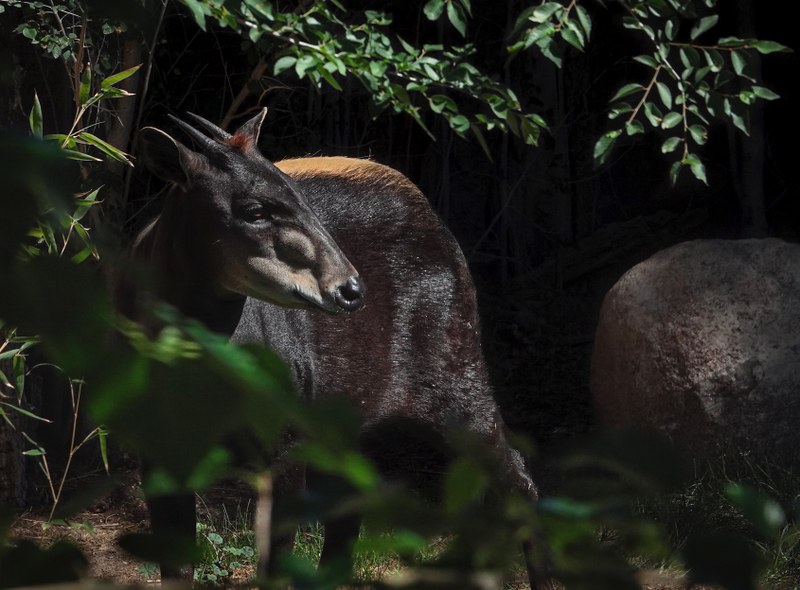
Sukie, the yellow-backed duiker, is a brand new species to the BioPark. She is four years old and resides in the previous cheetah habitat in Africa.

Sukie the yellow-backed duiker is pictured among green leaves in her habitat.
“Duiker’s are timid animals, so right now we’re focused on building a trusting relationship with her, and she’s responding well while she continues to get used to her new habitat,” said Lisa Moore, a member of her animal care team.
Yellow-baked duikers are forest-dwelling antelopes found mainly in central and western Africa.
They’re named for the patch of yellow hairs on their rump which puff up when the duiker is alarmed. The other half of their name, duiker, is the Afrikaans word for “diver” as they’re known to dive for cover when startled in the wild.
Sukie’s habitat is not yet visible to the public while she’s given some quiet time to adjust to her new home, but we look forward to welcoming guests to her area soon!
Mary the Cape porcupine on the other hand is now visible to the public, living in the Africa habitat next to the klipspringers.

Mary the porcupine roams her new habitat. She is equipped with bunches of black-and-white quills.
She is four years old and is the first Cape porcupine to reside at the BioPark.
“She's cautious, but sweet,” said Moore. “She’s a digger, so we've got mounds of dirt in there to encourage her.”
Cape porcupines are the world's largest porcupine and Africa's largest rodent. They are nocturnal, so guests can likely see her at her most active during evening events at the Zoo and on overcast days.
The BioPark is also thrilled to welcome two new common warthog sisters named Ripley and Leela who are nine months old.
They are currently being cared for at the BioPark clinic for their acclimation period, but will soon be visible to guests in the warthog habitat at the Zoo.

Warthog sisters Ripley and Leela in their yard at the BioPark clinic.
“They’re settling in really well and love to dig,” said BioPark clinic member Antonia Esparza. “Ripley is the brave one. She’s the first one to come in and likes to try everything out first. Leela is the smaller one that tends to be a little shyer and follows Ripley.”
Warthogs are active in the daytime and love to wallow in mud on hot days. We can’t wait for guests to meet these sweet sisters and the rest of the new arrivals to the Zoo!