

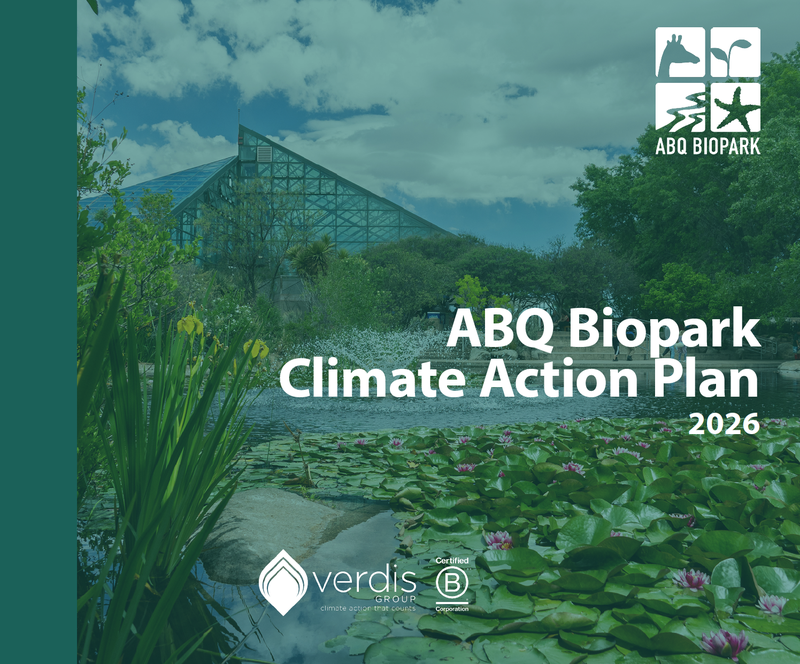
New ABQ BioPark Climate Action Plan Advances Heat Relief Efforts and Waste Audit
The roadmap will help protect animals, plants, guests, and resources as climate change brings hotter temperatures, drought, wildfire risk, and flooding to Albuquerque.
ABQ BioPark has completed its first-ever Climate Action Plan and is moving quickly into implementation, beginning with two immediate priorities: expanding heat relief for guests and staff, and conducting a BioPark-wide waste audit to better understand what materials are being discarded and how more can be reused, recycled, or composted.
The plan marks a major milestone for the BioPark, which for the first time measured the climate impact of its facilities and operations and identified practical steps to reduce emissions, conserve water, cut waste, and strengthen resilience across the ABQ BioPark Zoo, Aquarium, Botanic Garden and Tingley Beach.
The first priority is heat relief. As Albuquerque experiences hotter days and longer periods of extreme heat, BioPark staff are evaluating where guests, staff, animals, and plants are most exposed to heat across the BioPark and where additional shade, cooling, and other relief features would make the biggest difference. The Climate Action Plan sets a goal for all guests to be within three minutes of a heat relief feature.
Another immediate priority is a waste audit. BioPark teams will examine waste streams across facilities to establish a clearer baseline, identify what types of materials are most often discarded, better understand recycling and composting opportunities, and guide future decisions about waste diversion, zero-waste events, and composting infrastructure.
Climate change is not a distant threat. In Albuquerque, rising temperatures, long-term drought, wildfire risk, and heavier rain events are already affecting the people, animals, plants, and systems the BioPark depends on every day. These pressures can influence everything from guest safety and animal care to plant health, infrastructure, staffing, and daily operations.
“Completing our first Climate Action Plan is an important step for the ABQ BioPark and for our city, but the most important work is what comes next,” said Brandon Gibson, executive director of the ABQ BioPark. “Our team is starting with practical actions that people can see and feel, including improving heat relief across the BioPark and taking a closer look at our waste systems so we can make smarter, more sustainable decisions.”
Together, the heat relief effort and waste audit move the plan from long-term goals into day-to-day decisions. Heat relief work will help the BioPark prioritize shade, cooling, and comfort features in the places where they are needed most. The waste audit will help teams move from broad waste-reduction goals to more targeted action.
“At the ABQ BioPark, caring for animals and plants also means caring for the resources that sustain them,” said Tim Lyons, director of conservation at the New Mexico BioPark Society. “A waste audit gives us the information we need to make better decisions, and the heat relief effort helps us respond directly to one of the most immediate climate challenges facing our guests, staff, and living collections.”
The Climate Action Plan reinforces the BioPark’s conservation mission and shows how climate action can begin in practical, meaningful ways, by helping make the BioPark safer and more comfortable for guests, staff, animals, and plants and by taking better care of the resources that sustain them.