

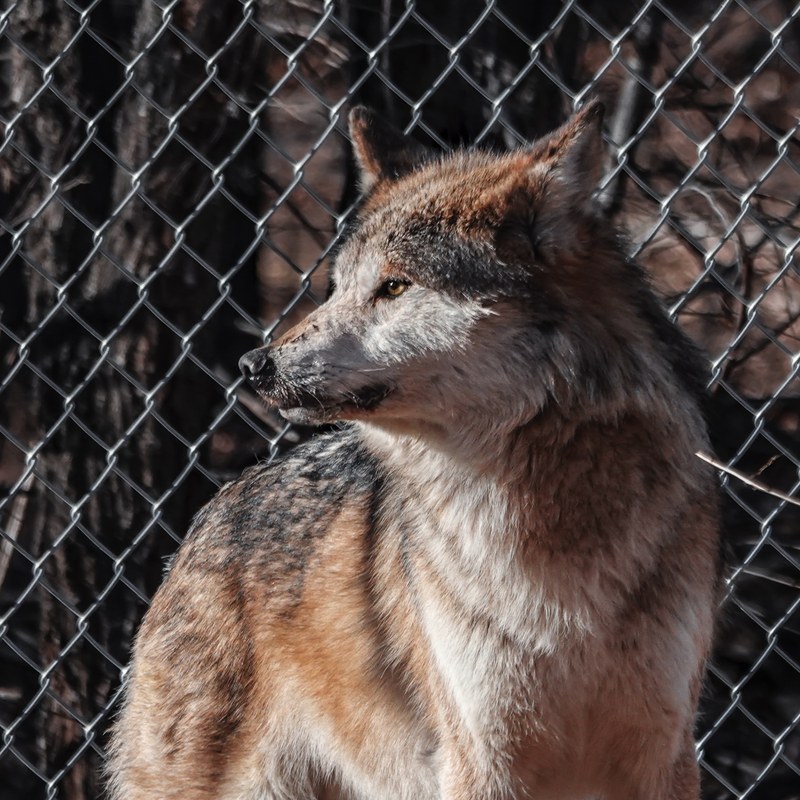
Mexican Wolf Flown Cross-Country as First Breeding Match for Behind-the-Scenes Mexican Wolf Conservation Facility
The male wolf was safely transported by LightHawk, a network of volunteer pilots dedicated to supporting conservation efforts in North America
The ABQ BioPark is pleased to welcome Mittermeier, a seven-year-old male Mexican wolf, who recently became the tenth resident of the new Mexican Wolf Conservation Facility. We announced the completion of the 4.5-acre behind-the-scenes facility in November of 2025, and the first nine residents arrived in December 2025. You can find those stories on the BioPark News page.
The facility is designed so wolves can be monitored with minimal human contact to preserve their wild nature. One of the primary functions of the new facility is to support wild wolves through coordinated breeding for release. Pups born at the BioPark’s Mexican Wolf Conservation Facility will be matched with wild litters of the same age and placed in their den. The wild mother will raise the additional pups alongside her own, increasing the population and genetic diversity. Mexican wolves are one of the focus species in the Association of Zoos and Aquariums' (AZA) Saving Animals From Extinction (SAFE) programs. Through AZA SAFE Mexican Wolf and the Species Survival Plan, Mittermeier has been recommended for breeding with one of the females and if successful they will be the parents of the first pups born in this new dedicated space. Mittermeier was escorted to his new home by a team consisting of animal care staff from his prior home, Stone Zoo in Massachusetts, as well as BioPark animal care staff and members of the LightHawk organization who facilitated his flight across the United States. Upon his arrival, Mittermeier immediately began exploring his new home and got a look at his new neighbor and intended mate! The BioPark’s expert animal care team will oversee their formal introduction after he is fully acclimated.
The Mexican wolf, a subspecies of gray wolf, is one of North America’s most endangered mammals. Conservation of this magnificent species is a collaborative effort of international partners including the United States Fish & Wildlife Service (USFWS), New Mexico Department of Wildlife (NMDOW), and over 50 AZA-accredited facilities throughout the United States and Mexico like the ABQ BioPark and Stone Zoo. Connecting this network is a vital role played by organizations like LightHawk, where over 300 volunteer pilots donate transportation for conservation efforts throughout Canada, Mexico, and the United States. Utilizing small aircraft and smaller airports reduces flight time and allows trusted animal care staff to accompany individuals, both of which reduce the stress of moving. Thanks to their commitment and generosity, endangered animals get the safe, private, V.I.P treatment they deserve as they get where they need to go as ambassadors and contributors to the survival of their species.
When we all work together, we can make a difference! The ABQ BioPark is excited to continue our commitment to Mexican wolf conservation, which we have been a part of for decades, and look forward to providing future updates from the off-exhibit Mexican Wolf Conservation Facility. Although this space is not viewable by the public, guests can still see a family of Mexican wolves in their habitat at the Zoo.
Media: Link to photos and B-roll

A volunteer pilot, coordinated by LightHawk, lands in Albuquerque with precious cargo: an endangered Mexican wolf named Mittermeier.