

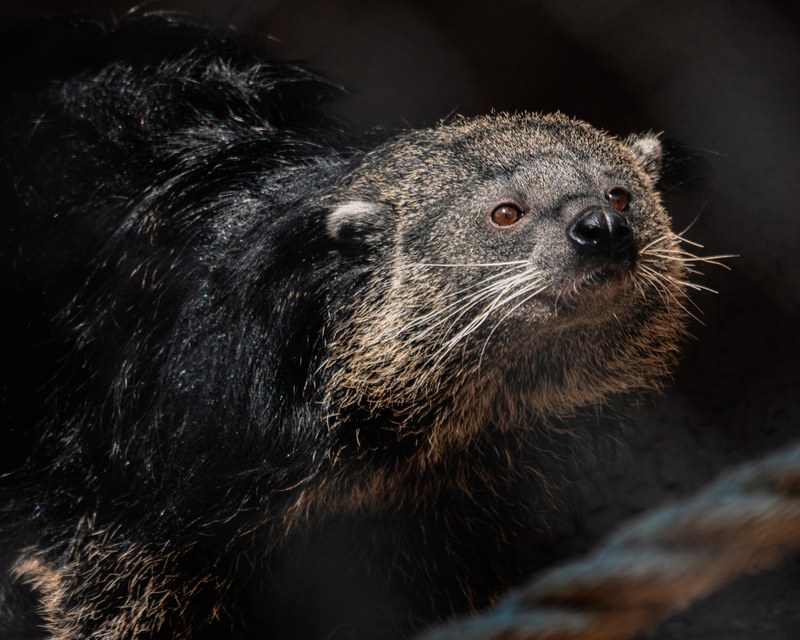
Introducing Poppy the Binturong!
ABQ BioPark is excited for the return of this superb species to the Zoo.
Guests may have noticed a new fuzzy face at Running Wild recently and wondered what exactly am I looking at? A bear? A cat?
How about both! Meet Poppy. She is a binturong, also known as a bearcat, who is new to the BioPark Zoo.
“She’s very curious and friendly,” said Brandon McCormick, a member of her care team. “She's settling in great and seems right at home here.”
Despite their nickname, binturongs are not closely related to bears or cats. They are nocturnal, tree-dwelling mammals native to the forests of south and southeast Asia. Some of their closest relatives include civets and fossas.
“They seem to have really good personalities, at least the ones I’ve worked with,” said Brandon. “One of the things I find most interesting about them is their tail which is capable of gripping things. It’s super thick and muscular, so they can hang from branches and use it to help them climb.”
Poppy is a young binturong, just over a year old. Like most binturongs, Poppy loves to climb and be up high, so the team made sure to include plenty of vertical space in her habitat. She’s also taken a liking to her pool, which she enjoys splashing in occasionally.
Having made her debut on July 1, she is already charming her care team with her outgoing personality and pungent popcorn scent that her species is famous for!
“She's very social and warmed up to us very quickly,” said Brandon. “And the popcorn smell is fascinating. Her building is just permanently infused with it.”
Now that Poppy is acquainted with her space and main care staff, the goal is to get her comfortable with the whole carnivore care team through slow and steady introductions.
“Right now we’re just taking it slow to build up her comfort level and make sure we understand her behavior,” said Brandon. “Once she’s comfortable interacting with us, the next step is to start voluntary training with her in the habitat which will allow her to participate in her own healthcare.”
Binturongs are listed as Vulnerable by the International Union for Conservation of Nature (IUCN), so the BioPark is honored to have Poppy here to help bring awareness to this fascinating species. Be sure to give her a warm welcome during your next visit!