

ABQ BioPark Helps Injured Mexican Gray Wolf Heal and Return to the Wild
New wolf conservation facility will expand medical care, rehabilitation, and support for the Mexican gray wolf recovery program.
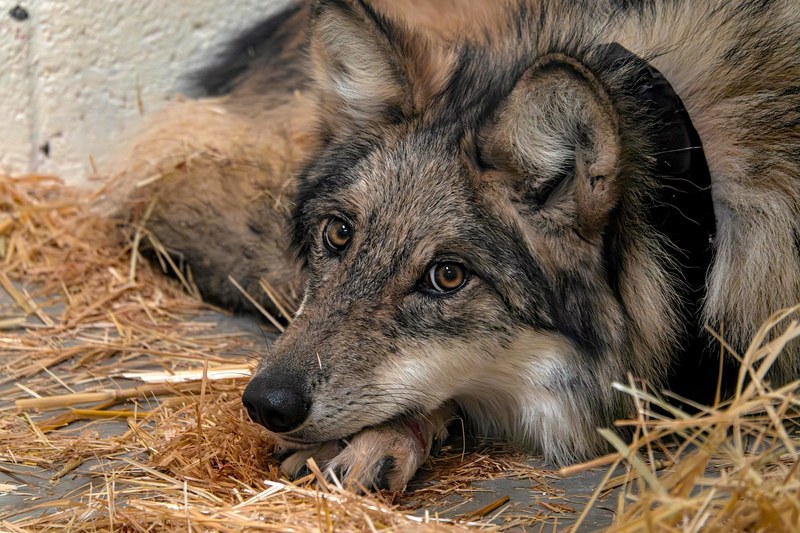
When a young male Mexican gray wolf was with a leg injury, the ABQ BioPark’s veterinary team was ready to provide critical care support. As the only veterinary clinic currently caring for Mexican gray wolves living in the wild, the BioPark once again stepped in to provide the expert care this endangered animal needed to get a second chance.
The wolf, estimated to be about eight months old, was brought to the BioPark with a leg injury. The injury was infected, and the veterinary team also discovered a chip fracture in his foot. Thankfully, his wounds were treatable. For two weeks, the wolf received supportive care at the BioPark including medication and rest to allow a full recovery.
Once he was stable and moving comfortably, the wolf was fitted with a tracking collar and released in an area near his pack. U.S. Fish and Wildlife Service biologists will monitor him.
“Every individual wolf matters, and we are rooting for this young male’s successful reunion with his pack and a long life in the wild,” said Lynn Tupa, associate director at the BioPark. “Our team is proud to provide specialized care for Mexican gray wolves who are injured or ill in the wild. Every time we return a wolf to nature it is an important win for conservation.”
Mexican gray wolves were listed as endangered in 1976 after their numbers plummeted to just a handful of animals. Since then, a coordinated recovery program involving the U.S. Fish and Wildlife Service (USFWS), the Association of Zoos and Aquariums (AZA), and partner institutions like the ABQ BioPark has helped the wild population steadily increase.
Today, every wolf that can be treated and returned to the wild is essential to maintaining genetic diversity and restoring a healthy, functioning ecosystem in the Southwest.
The ABQ BioPark is also expanding its conservation efforts with wolves by opening the new Mexican Gray Wolf Conservation Facility later this month. This new specialized space will support the broader recovery program by:
· Providing more expansive, natural recovery areas for wolves that are treated for injuries or illness.
· Expanding the BioPark’s participation in wolf fostering efforts, coordinated by USFWS, to place zoo-born pups into wild litters that bolster wild packs.
· Contributing to breeding programs that increase genetic diversity, advancing the AZA Saving Animals From Extinction (SAFE) program and the Mexican gray wolf Species Survival Plan.
From this wolf’s recovery to its ongoing work with fostering and conservation breeding, the ABQ BioPark demonstrates a deep commitment to giving Mexican gray wolves every opportunity to thrive. The new facility underscores the belief that caring for wildlife and the wild places they depend on is a shared community responsibility.