

ABQ Fresh Forum: A Free Event Elevating Our Local Food Future

Join us for a FREE forum. We're bringing Albuquerque together to build a local food system that provides access to healthy, affordable food for every family.
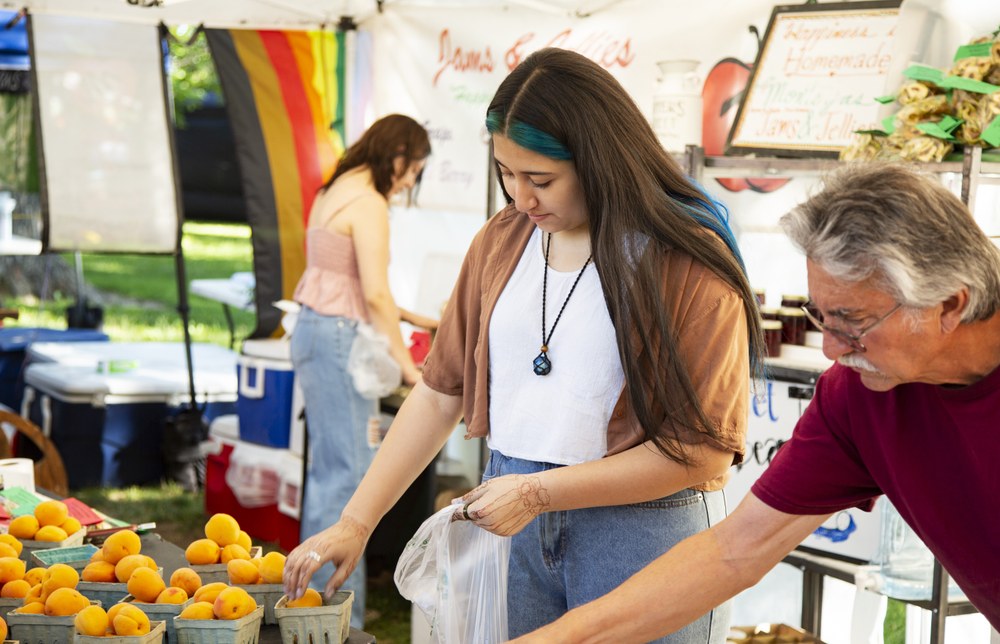
Two people choosing oranges at an outdoor market.

Date: Dec. 16, 2025
Time: 8 a.m. to 5:30 p.m.
Location: ABQ Convention Center

The ABQ Fresh Forum, planned for December 16, 2025, will bring together city leaders, community partners, growers, producers, distributors, and local businesses to design a stronger, more sustainable, and more affordable food system for Albuquerque.

This one-day forum is part of Affordable ABQ, the City’s initiative to make everyday life more affordable for families. It will focus on expanding access to fresh,  healthy food, especially in undeserved neighborhoods and food deserts, while strengthening the local food economy.

We are working to craft and implement policies and programs to increase access to fresh, healthy, affordable foods for families in Albuquerque, including:

  • Supporting the local food system at all levels, from local food growers and producers to local food distribution networks to local vendors and direct sales opportunities
  • Permitting small-scale neighborhood markets and bodegas, and incentivizing fresh and healthy food options
  • Permitting mobile food markets and incentivizing fresh and healthy food options
  • Working with all sectors within the local food system to establish an equitable, resilient and sustainable food system in Albuquerque

Register for Free to Attend the ABQ Fresh Forum

View Program

Main Forum Goal

To inform and supplement the implementation of Mayor Keller’s Executive Order for an affordable, equitable, sustainable, resilient, and self-reliant local food system by bringing together community leaders, local growers, small businesses, nonprofits, and City departments.

The forum aims to turn policy directives into actionable strategies, pilot programs, and community partnerships that strengthen Albuquerque’s local food system—from urban agriculture to food access to composting and food rescue.

Participants/Attendees

This forum is designed for the diverse network of stakeholders who influence or participate in Albuquerque’s local food economy, including:

  • Local farmers, growers, and agricultural cooperatives
  • Neighborhood leaders and community garden coordinators
  • Neighborhood market owners, small retailers, and food entrepreneurs
  • Food rescue, food bank, food pantry, and food service organizations and agencies
  • Sustainability and composting organizations and agencies
  • APS and higher education partners involved in nutrition, sustainability, agricultural, economic development and/or equity education
  • Nonprofits, foundations, and residents invested in food justice, climate action, and affordability
  • City of Albuquerque staff from more than a dozen departments identified in the Mayor’s Local Food System Executive Order (EO)

The forum will serve as a collaborative workspace, not a lecture series—prioritizing community voices, co-creation, problem-solving, and measurable next steps.

Expected Outcomes

By the end of the ABQ Fresh Forum, the City and community partners will have:

  1. A Shared Implementation Framework:
    • Clear priorities and strategies for advancing each of the EO’s directives through cross-departmental and community partnerships.
  2. Pilot Project Proposals:
    • Concrete ideas ready for early implementation—such as identifying City-owned land for community gardens and other food system-related activities, outlining a neighborhood micro-market model, and expanding surplus food rescue and composting initiatives.
  3. Community-Generated Recommendations:
    • Policy and program input that informs the Local Food System City Task Force’s workplan, ensuring community participation shapes ongoing decisions.
  4. New Partnerships and Resource Alignment:
    • Strengthened collaboration among City departments, nonprofits, and local businesses, and identification of funding or incentive opportunities to sustain the initiatives.
  5. Momentum for Long-Term Engagement:
    • A unified commitment to making “buying local” synonymous with “buying affordable,” positioning Albuquerque as a model for resilient, equitable, urban food systems.


Program Overview

  • 8-9 a.m. | Check-in & Breakfast
  • 9 to 9:30 a.m. | Welcome
  • 9:45 to 11:30 a.m | Block A: Growing the Local Food System
  • 11:30 a.m. to 1:00 p.m. | Working Lunch (Networking & Collaboration) – Connecting the Dots
  • 1 to 2:45 p.m. | Block B: Expanding Food Access and Affordability
  • 3 to 4:45 p.m. | Block C: Circular Food Systems & Sustainability
  • 5 to 5:30 p.m. | Closing

Full Program

8 to 9 a.m. | Check-In & Breakfast

  • Goals & Visioning boards with materials
  • City Department Tables
  • Networking

9 to 9:30 a.m. | Welcome & Introduction

  •  Welcome – Mayor Tim Keller
  • Opening Comments – District 6 City Councilor Nichole Rogers
  • Opening Invocation – Brandi Ahmie, Tribal Liaison, City of Albuquerque
  • Orientation & Goals
  • Community Agreement

9:45 to 10:45 a.m | Discussion Panel A: Policy and Partnership for Urban Agriculture 

Discussion on zoning, incentives, public policy, and partnerships to support urban agriculture in Albuquerque.

Panelists:

  • Amanda Powers, Founder/Farmer, Enchanted Farms Mushrooms
  • Ben Bustos, Principal, Polk Middle School
  • Helga Garcia-Garza, Executive Director, Agri-Cultura Cooperative Network
  • Eugene Pickett, Chairman/Founder Black Farmers & Ranchers New Mexico Global, Governing Committee NM Food & Agricultural Policy Council, Vice President Latino Farmers & Ranchers International Inc 

Facilitator:  Stefany Olivas, Local Agriculture Community Coordinator, CABQ Parks & Recreation Department Open Space Division

10:45 to 11:30 a.m. | Interactive Break Out A: Urban Agriculture & Community Growing 

  • Hands-on and interactive City-owned property map assessment of urban agriculture opportunities.
  • Explore how City facilities, properties, and public spaces can support growing.
  • Identify policies to support local/urban agriculture.
  • Explore how partnerships can support urban agriculture in Albuquerque.

11:30 a.m. to 1 p.m. | Working Lunch| Connecting the Dots

  • Informal round-table discussions organized by theme tables:
    • Food Producer Partnerships
    • Food Business Support
    • Surplus Food Rescue Collaboration & Composting

1 to 2 p.m. | Discussion Panel B: Access & Equity: Making Local Food Affordable

Discussion about opportunities to address challenges/barriers to local food access – incentives, resources, partnerships, and policies.

Panelists:

  • Chris Whitson, Owner, Farm to You by Bom Vida Farms
  • Sean Humphrey, Director of Operations & Collaborative Food Systems, Rio Grande Community Development Corporation
  • Sarah Horowitz, Sales and Special Projects Manager, Three Sisters Kitchen
  • Alaska Piper, Director, Rail Yards Market

2 to 2:45 p.m. | Interactive Break Out B: Neighborhood Bodegas & Mobile Fresh Food Markets

  • Workshop for equitable, sustainable neighborhood food access.
  • Connecting local growers/producers with local business and customers.
  • Co-create “Neighborhood Food” models.
  • Hands-on and interactive map assessment to identify opportunities to expand food access through the use of City-owned properties.

3 to 4 p.m. | Discussion Panel C: Closing the Loop: Turning Waste into Resource

Discussion about waste reduction, including surplus food rescue and redistribution and waste diversion and composting.

Panelists:

  • Dawn Dewey, Owner, Soilutions
  • Sandra West, Sustainability Specialist, CABQ Environmental Health Department Office of Sustainability
  • Dana Yost, CEO, Roadrunner Food Bank
  • Janice Lucero, Owner, Cotton Blossom Gardens

4 to 4:45 p.m. | Interactive Break Out C: Surplus Food Rescue & Composting Innovation Lab

  • Work-shopping ways the City can support organizations, businesses, and networks doing food waste prevention, rescue, and composting work in Albuquerque.
  • Hands-on and interactive map assessment to identify opportunities to utilize City-owned properties for surplus food rescue and redistribution and for composting.

5 to 5:30 p.m. | Closing & Recap

  • Next Steps
  • Call to Action